
Catch-and-release fishing, local knowledge and the remarkable river landscape of Corbett.
Some fishing journeys are remembered for the fish caught; others stay with us for the patience, anticipation and unexpected encounters along the river. From 10 to 14 October 2026, Vanghat welcomed an Australian couple for a four-night stay centred around catch-and-release fishing on the Western Ramganga. Their names have been withheld for privacy reasons.
Surrounded by the forests of the Corbett landscape, the couple experienced the excitement of landing fish, the challenge of pursuing a much larger one, and the simple pleasure of spending time beside a river with a rich natural and angling heritage.
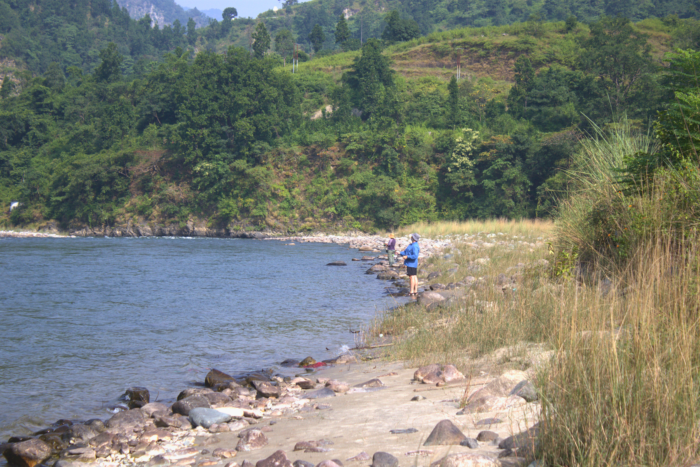
The Western Ramganga: A River with a Rich Angling Heritage
The Western Ramganga is shaped by the forested catchments of the Kumaon Himalaya, with its headwaters originating in the Dudhatoli region. Unlike rivers primarily sustained by Himalayan snowmelt, its flow is closely connected to rainfall and the water systems of the surrounding forests. As it winds through wooded valleys towards Corbett Tiger Reserve, it creates a varied landscape of rocky shallows, flowing rapids and deep pools.
The river has a long history of fishing and conservation. Its celebrated fish attracted the attention of former rulers, including the Maharaja of Tehri, whose protection of these fish forms part of the region’s angling heritage. During the British period, the Western Ramganga became known as a prized angling beat, establishing a reputation that continues to draw fishing enthusiasts to its waters.
Among its most iconic fish is the Golden Mahseer (Tor putitora), a powerful freshwater fish that has captivated anglers for generations. The river is also associated with the formidable Goonch, a giant catfish belonging to the genus Bagarius. Both are known for their strength, and exceptional individuals can grow to impressive sizes, making encounters with them particularly memorable.
Other freshwater fish contribute to the river’s diversity, including the locally known Indian trout, which is not a true trout, and Kalbasu. More than 40 fish species have been recorded in the Western Ramganga river system, highlighting the importance of its aquatic habitats.
Today, the river flows through a wildlife-rich, well-wooded valley connected to the Corbett landscape. Its significance extends beyond fishing: the river and its surrounding forests support a diverse ecosystem of aquatic life, birds and mammals.
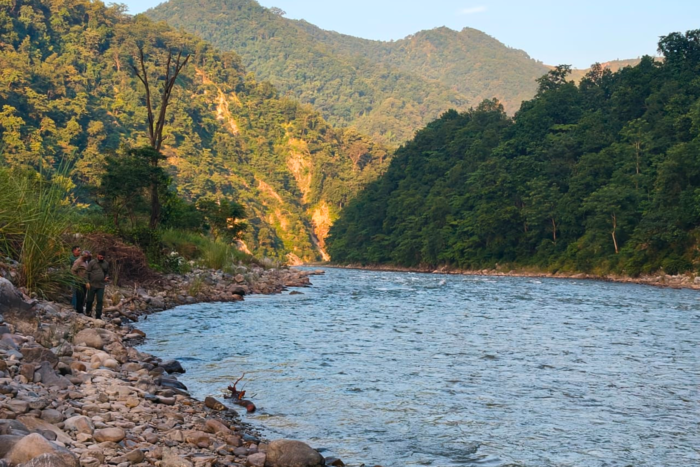
Vanghat: A Base for Exploring the River
Situated beside the Western Ramganga, Vanghat offers a base for exploring the river through catch-and-release fishing. Outings can extend beyond the immediate surroundings of the lodge to selected stretches upstream and other locations along the river.
Depending on the arrangements, longer fishing itineraries may also include riverside camping or stays in local homestays and guesthouses. These experiences allow anglers to spend more time close to the water while benefiting from the knowledge of people familiar with the river.
Catch-and-release fishing places the emphasis on the experience rather than the possession of a catch. Patience, observation, technique and respect for the fish are all part of the journey. During the couple’s stay at Vanghat, each fishing outing offered a different experience of the river.
10 October 2026: Arrival at Vanghat
The couple arrived at Vanghat at around 4 pm, having had lunch on the way. Reaching the remote camp, surrounded by forest and the Western Ramganga landscape, marked the beginning of their fishing journey.
After settling in and taking some time to rest, they went for an evening walk along the river. The quiet surroundings offered a gentle introduction to the landscape they would explore over the next few days.
They returned to camp for dinner and retired early, looking forward to their first fishing outing the following morning.
11 October 2026: Fishing Towards Bandran
After breakfast, the couple set out for their first fishing outing towards Bandran. They walked approximately 2 kilometres from Vanghat to Jamariya village, where a vehicle was waiting to take them towards the fishing location.
The group included a fishing guide, local guides and Satish ji from the Vanghat team, who accompanied them with meals for the day. Their support helped the guests focus on the fishing experience while benefiting from their familiarity with the landscape.
The first outing tested their patience. After several attempts, they finally caught their first fish. The excitement of that moment made the effort worthwhile.
They paused for a break with sandwiches and eggs before continuing their time by the river. The hours passed as they concentrated on the water and waited for the next opportunity.
By the time they returned to Vanghat, they had spent a rewarding day outdoors. Dinner at the camp brought their first day of fishing to a relaxed close.
12 October 2026: A Rewarding Day at Marchula Sangam
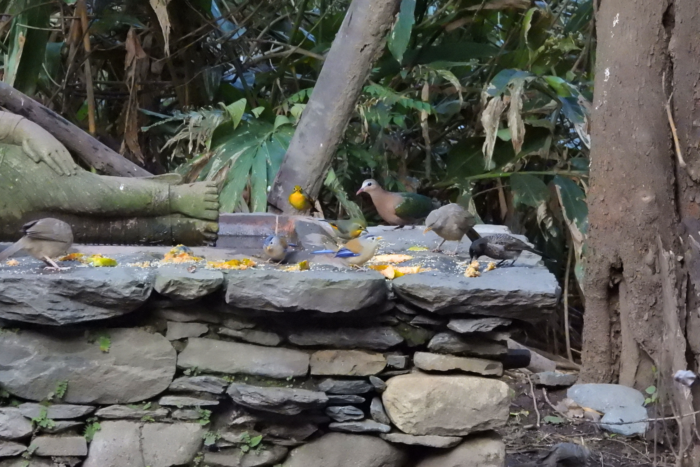
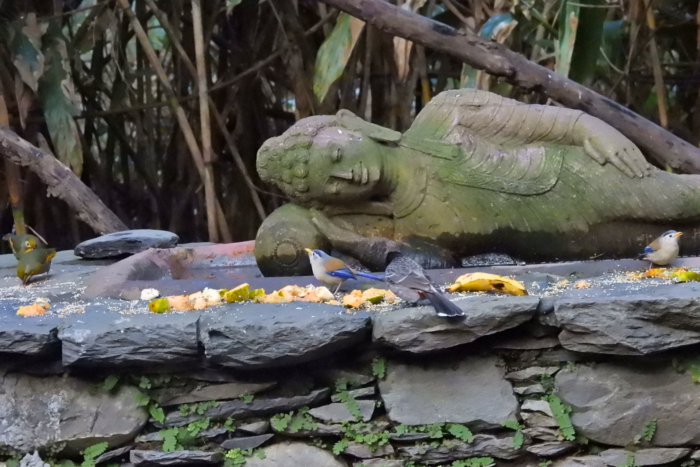
The following morning began with a lovely sight: birds gathering around the camp’s dining area. It was a reminder that the experience at Vanghat extends beyond fishing, with opportunities to observe wildlife even before the day’s outing begins.
After breakfast, the couple headed towards Marchula Sangam. The fishing proved more productive, and they caught three fish, each weighing approximately 1.5 kilograms (3.3 pounds). Each catch brought a fresh sense of excitement and made the outing particularly rewarding.
Lunch was another memorable part of the day. They enjoyed vegetable biryani, raita, eggs and green chillies before spending more time outdoors and returning to camp.
The day brought together time on the river, the guidance of people familiar with its waters, and the simple pleasure of enjoying a meal surrounded by the natural landscape.
13 October 2026: Three Catches and the One That Got Away
The couple’s final fishing outing took them further upstream along the Western Ramganga. Accompanied by local guides, they explored another stretch of the river, enjoying the challenge and anticipation that make every fishing outing different.
The day proved rewarding, with three fish caught, each weighing approximately 2 kilograms (4.4 pounds). However, the most exciting encounter came when they hooked a much larger fish, estimated to weigh around 12 kilograms (26.5 pounds).
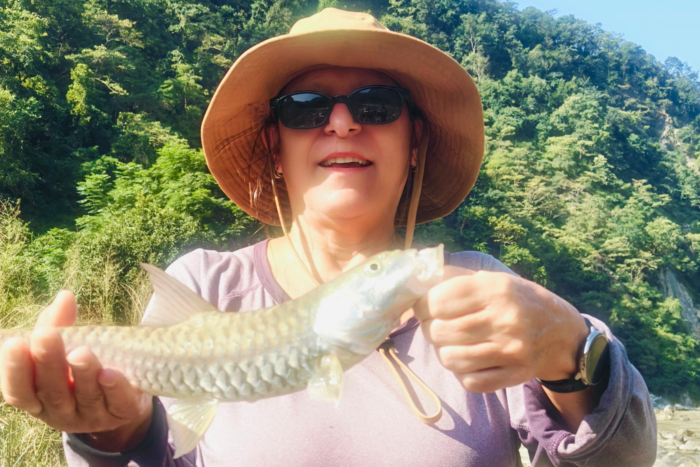
With the help of a local guide using spin-fishing techniques, the large fish was brought close to the riverbank. Despite their efforts, the couple could not land it, and the fish eventually slipped away.
Although the larger fish was not landed, the encounter became one of the most memorable moments of their trip. It was a reminder that fishing is unpredictable and that sometimes the stories anglers take home are about the fish that get away.
Throughout the outings, catch-and-release fishing remained central to the experience. The focus was on enjoying the challenge, appreciating the river and returning the fish to the water.
Beyond Fishing: The Vanghat Experience
The couple’s time at Vanghat was about much more than fishing. The mornings brought birds to the dining area, the river offered a different experience each day, and the meals enjoyed during the outings gave them time to pause and appreciate their surroundings.
The support of the Vanghat team and the knowledge of the local guides were integral to the journey. From helping the guests reach different stretches of the river to accompanying them throughout the outings, their contribution helped make the experience memorable.
On their way out, the couple also encountered elephants, peafowl and several other bird species. These sightings were a fitting conclusion to their stay in the Corbett landscape, where wildlife remains an ever-present part of the experience.
14 October 2026: Departure with Lasting Memories
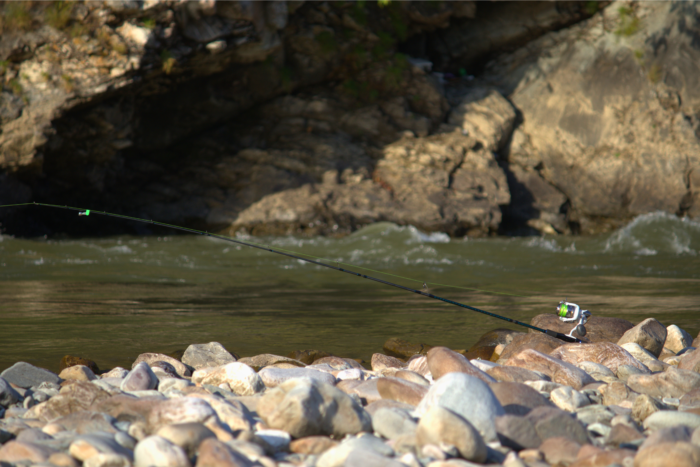
On 14 October, the couple departed Vanghat with memories of the river, the fishing challenges and the people who had made their experience special.
Their journey brought together the excitement of the first catch towards Bandran, the three fish caught at Marchula Sangam, and the three catches on the final fishing outing. The encounter with the much larger fish upstream was equally memorable, even though it could not be landed. Just as special were the birds around the camp, the meals enjoyed during the outings and the wildlife sightings along the way.
For those who enjoy fishing, the Western Ramganga offers an opportunity to slow down, learn from local expertise and experience a landscape where the river and forest are as much a part of the journey as the fishing itself.
Some memories come from the fish landed; others come from the ones that get away. At Vanghat, both became part of a memorable four-night journey along the Western Ramganga.
Categorised in: Vanghat Blogs
This post was written by Vanghat Admin


