
Manila Devi, Almora — A Haven for Himalayan Wildlife & Majestic Peaks
4th May – 7th May 2026
Participants:- Sumantha Ghosh, Pushpa Ghosh, Sanvi Ghosh, Shubham Ghosh, Rajeev Kumar and Mamta Karmiyal.
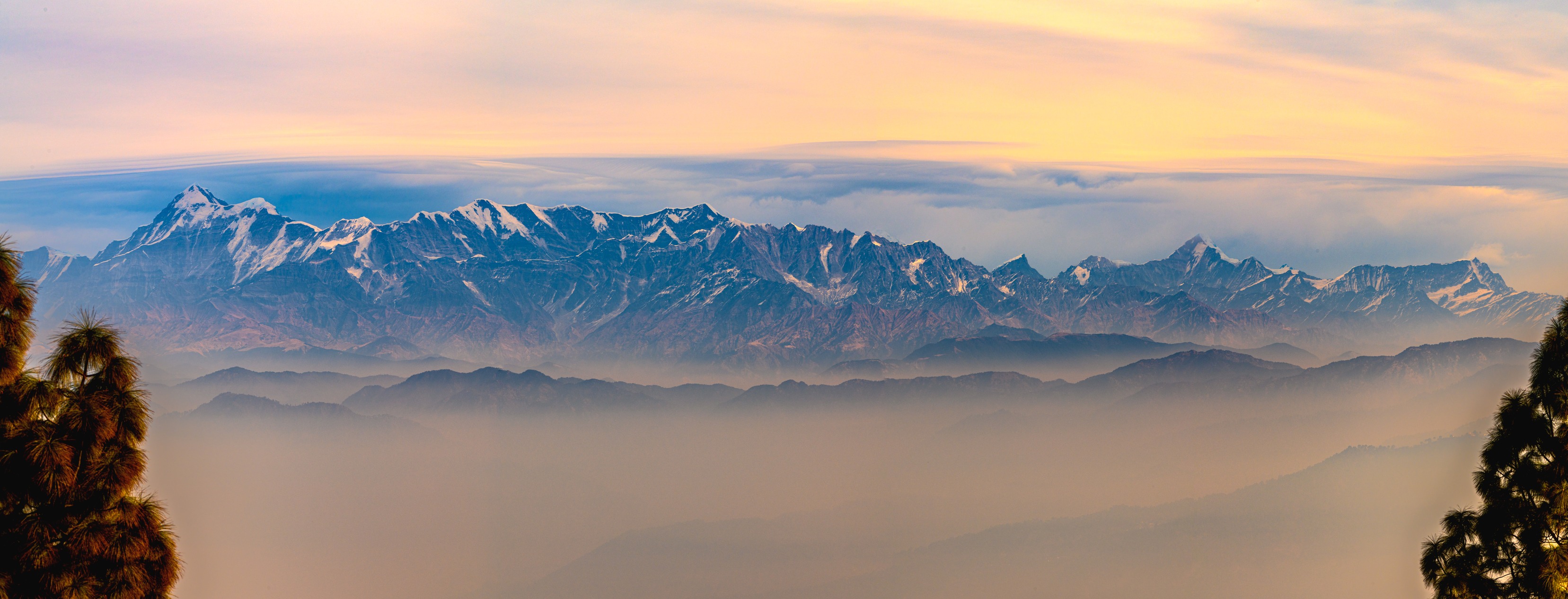
Perched high above the Western Ramganga Valley, where dense forests give way to sweeping Himalayan vistas, lies the quiet mountain town of Manila. Revered for the ancient Manila Devi Temple, the presiding deity of the region, and celebrated among birdwatchers for its remarkable biodiversity, this lesser-known corner of Kumaon offers far more than spectacular views—it offers an opportunity to experience the Himalaya at a slower pace.
Situated at an elevation of around 1,800 metres, Manila occupies a scenic ridge that, on clear days, commands breathtaking views of the Nanda Devi, Trishul, and Nanda Ghunti ranges. The surrounding landscape is a fascinating mosaic of Chir Pine forests, majestic stands of Deodar, and higher temperate woodlands dominated by Banj Oak and Rhododendron. These forests provide refuge to an extraordinary variety of wildlife, including the elusive Cheer Pheasant, Koklass Pheasant, Yellow-throated Marten, Himalayan Goral, and numerous Himalayan bird species, making Manila one of Kumaon’s most rewarding destinations for birding and nature exploration.
The region’s deep spiritual significance has also helped preserve its natural heritage. For generations, the sacred forests surrounding the Manila Devi Temple have remained largely undisturbed, allowing wildlife to thrive alongside local communities in remarkable harmony.
Over the next three days, we experienced exceptional birdwatching, warm village hospitality, dramatic mountain weather, and unforgettable moments shared with family amidst the forests and mountains of Kumaon.
Some journeys entertain you for a while.
Others quietly stay with you long after they end.
Manila became one of those journeys.
Day 1 — Into the Hills & A Village Wedding
We began our journey from Ramnagar early in the morning, around 5:30 a.m. The road towards Manila gradually climbed through river valleys, winding mountain roads, and dense forests, taking us deeper into the Kumaon Himalaya with every passing kilometre.
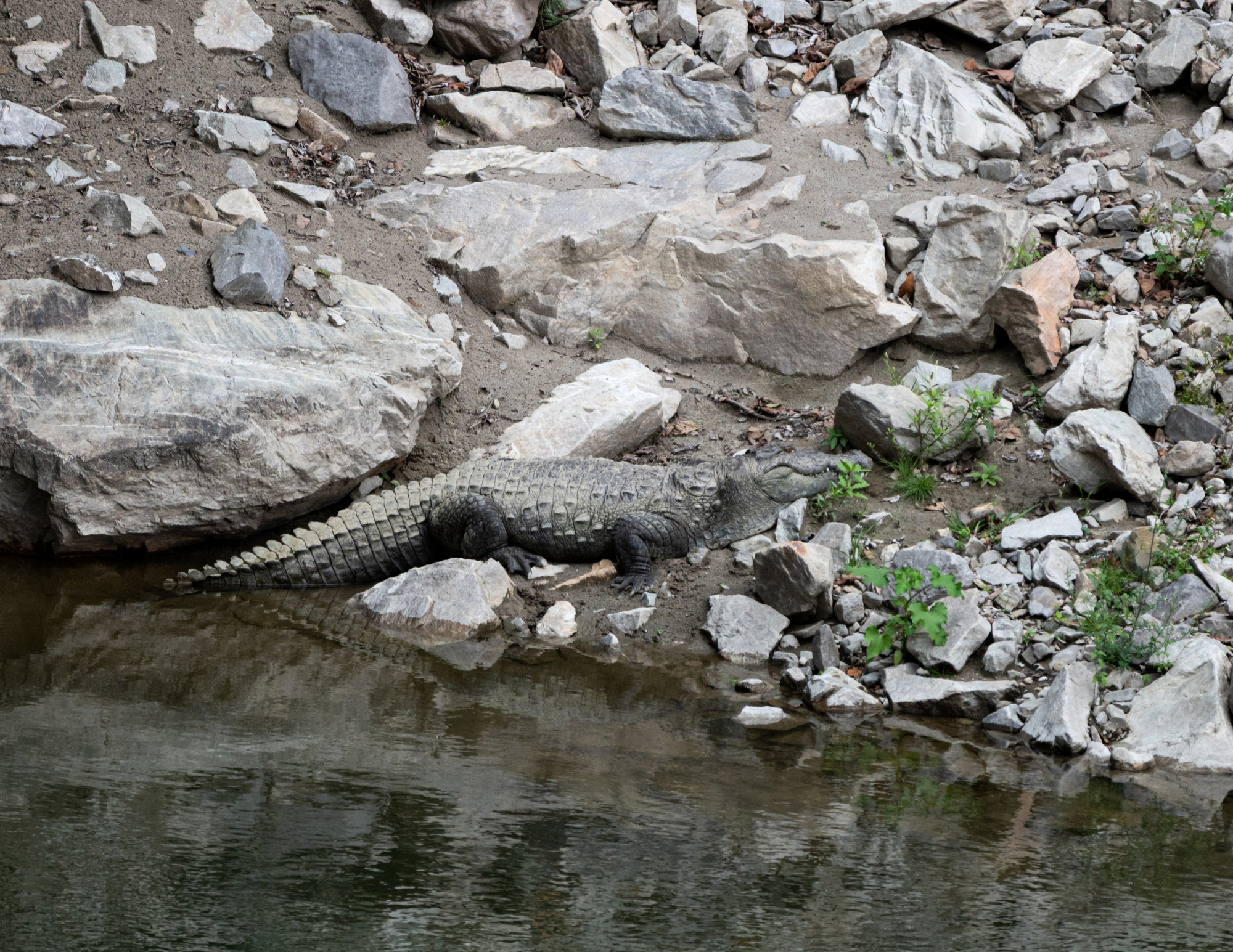
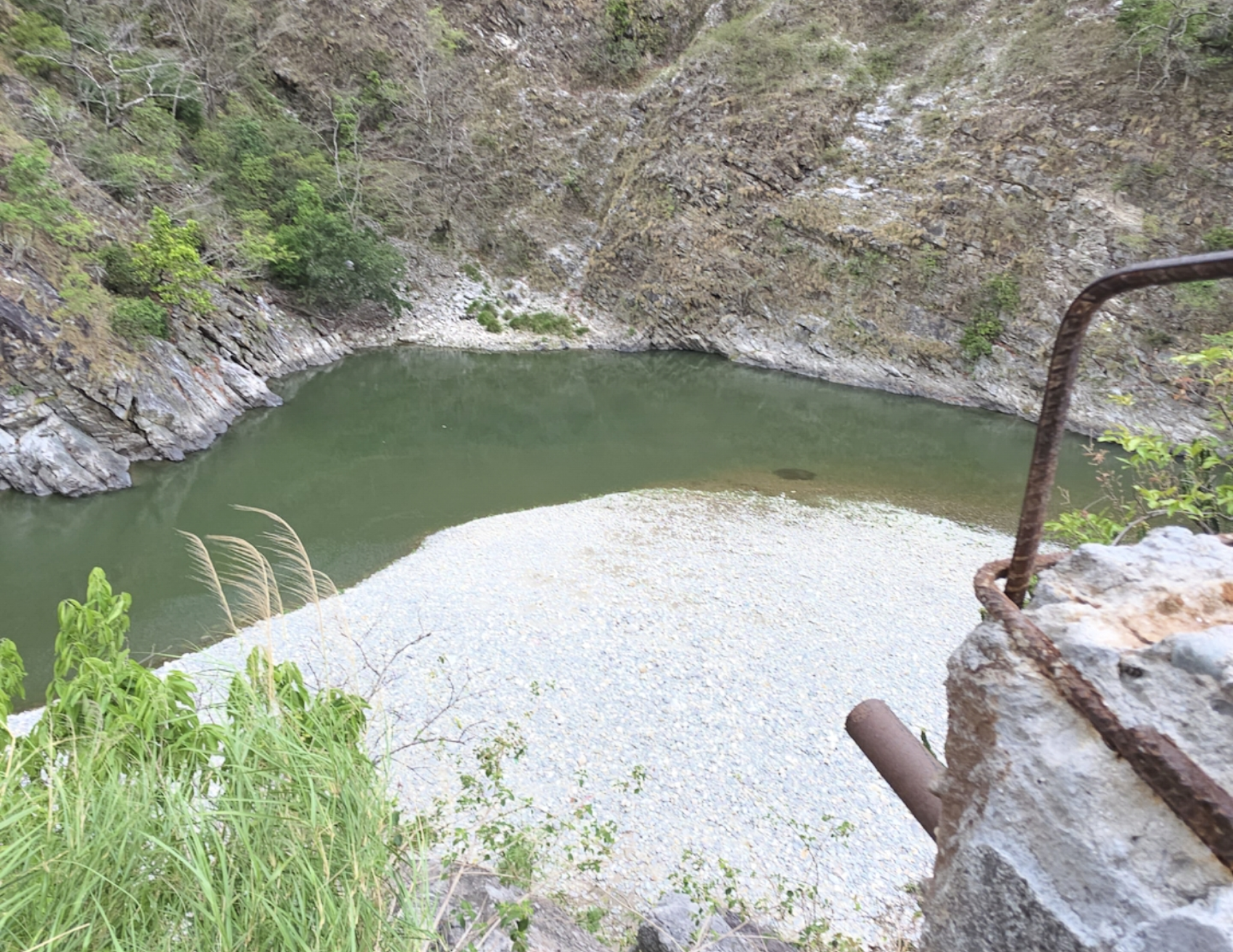
Our first stop of the morning was at Crocodile Point in Marchula, where the Ramganga River winds gracefully through the valley. We were fortunate to spot a young Marsh Crocodile basking quietly along the riverbank. Local naturalists shared that only a few days earlier, an adult crocodile had preyed upon a mountain goat at the very same location—a vivid reminder that beneath the calm waters, the Ramganga continues to support a thriving and dynamic ecosystem. The fresh mountain breeze, flowing river, and our very first wildlife sighting made for an exciting beginning to the journey.
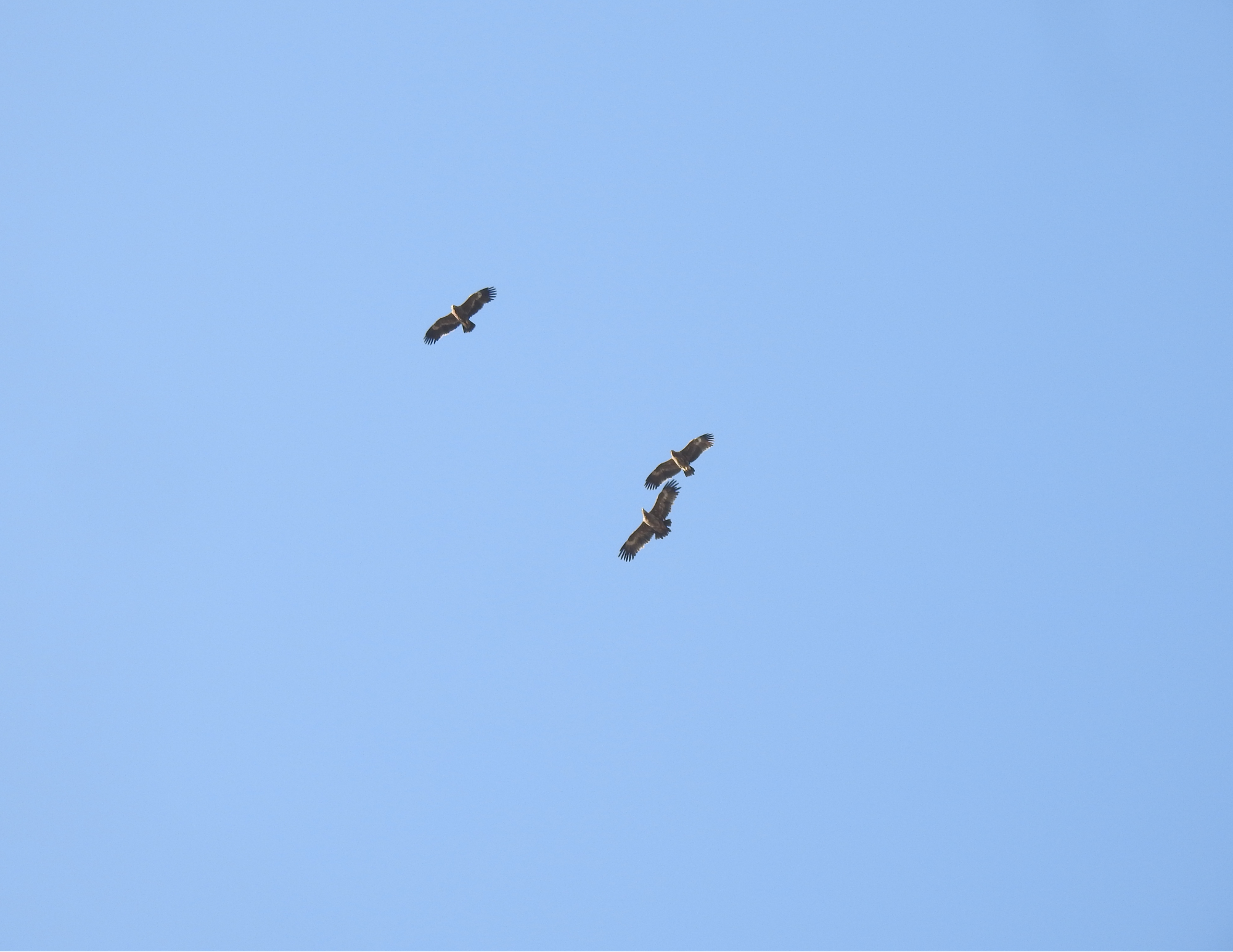
Leaving Marchula behind, the road continued climbing through dense forests and mountain bends. Nearly half an hour before reaching Manila, a broad valley unfolding beside the road caught our attention. Several large raptors were effortlessly soaring above the forested slopes, making full use of the rising morning thermals. We pulled over for a few minutes, watching them circle gracefully over the valley. Among them was what appeared to be a Mountain Hawk-Eagle, drifting silently across the ridgeline before disappearing into the distance. It was one of those unexpected roadside moments that reminds you that the journey itself can be just as rewarding as the destination.
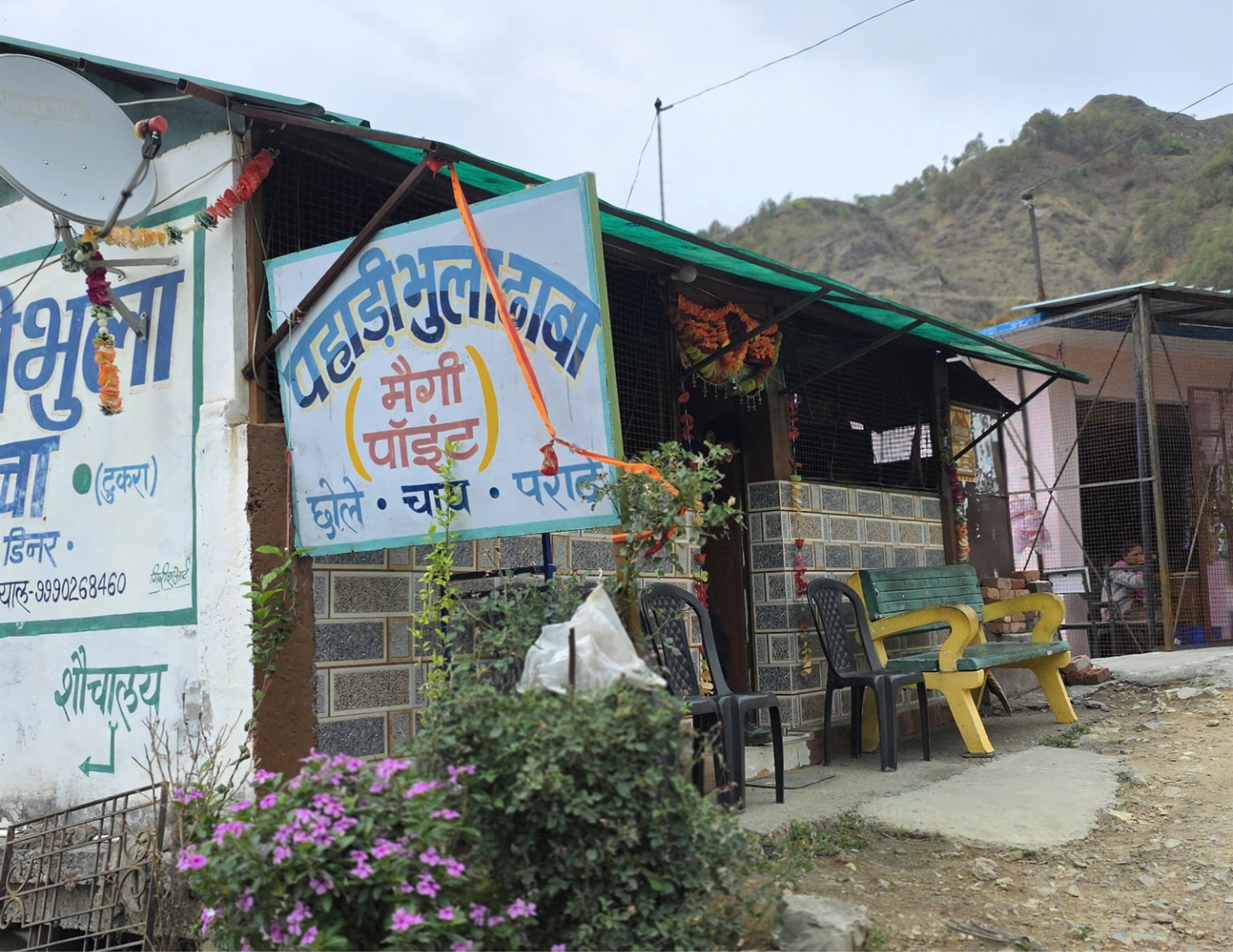
A little further ahead, barely a kilometre before reaching Manila, we stopped at the familiar Pahadi Bhula Dhaba for a cup of hot tea and some light refreshments. Places like these somehow become an important part of every mountain journey—simple food, steaming chai, crisp mountain air, and conversations that feel lighter in the hills.
As we continued the final stretch towards Manila, the landscape became increasingly dramatic. Towering Chir Pine forests lined the roads while clouds drifted lazily through the valleys below. Although it was the month of May, intermittent rain had brought the temperature down considerably, and before long we found ourselves wrapped in jackets and hoodies.
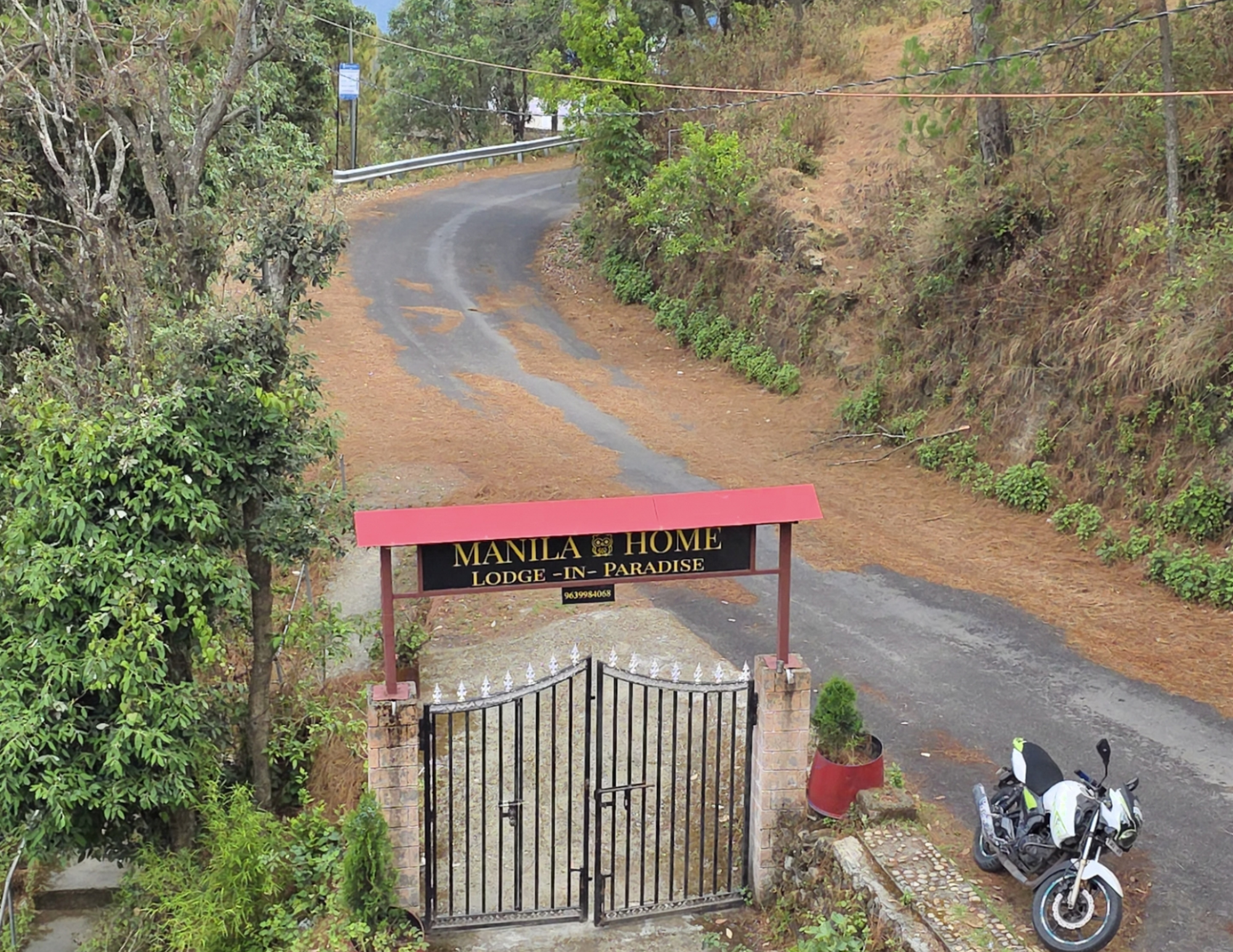
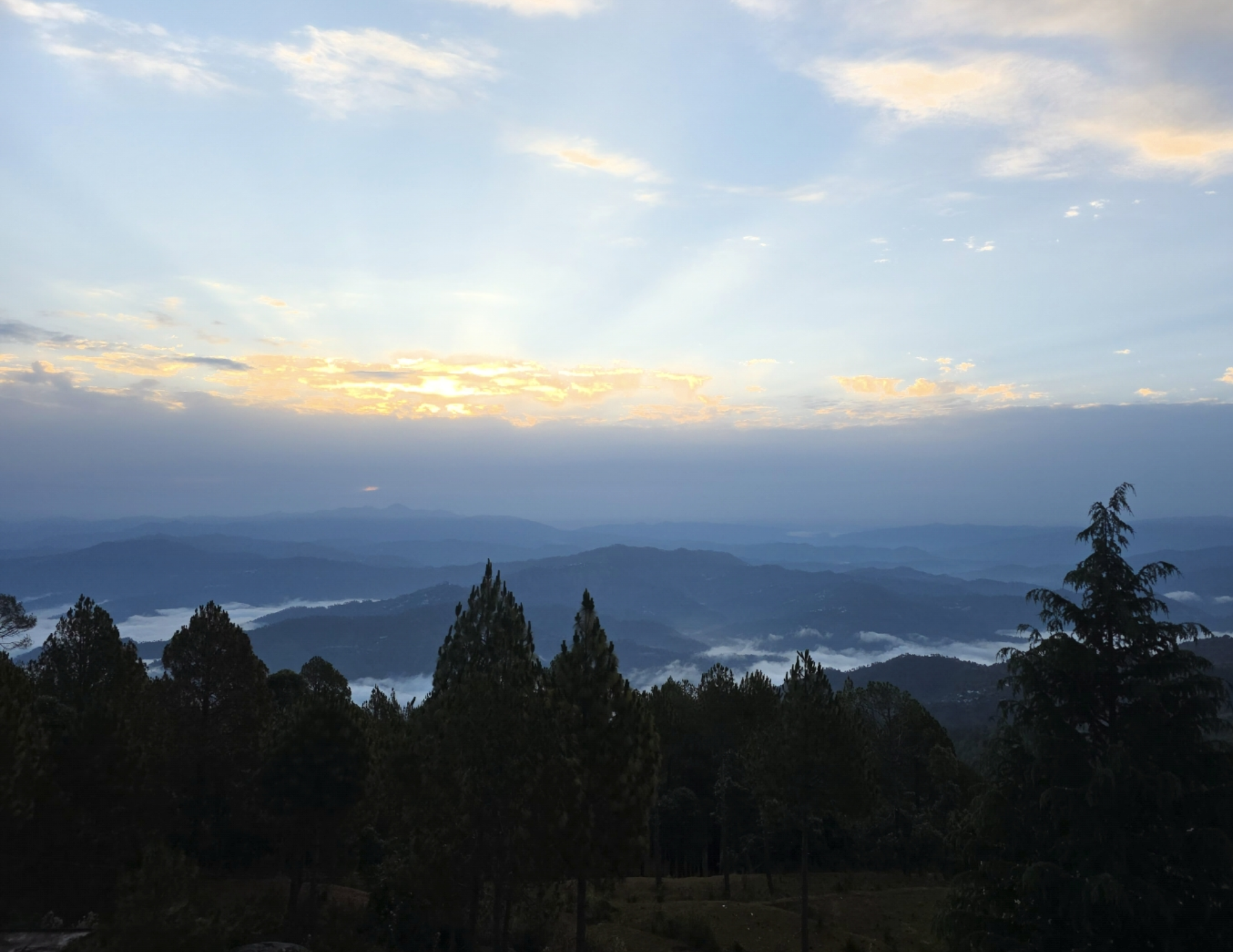
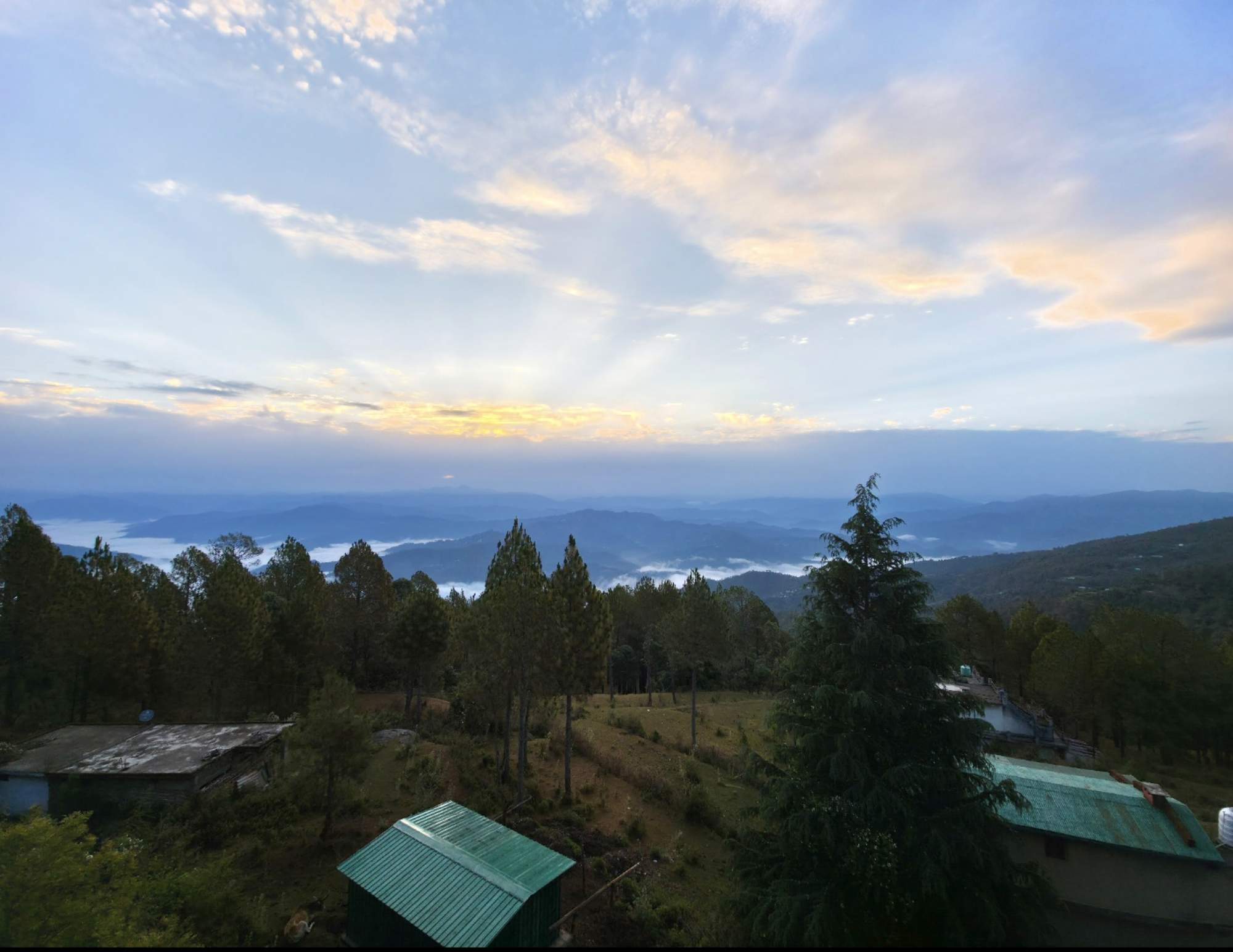
After nearly two and a half hours, we finally reached Manila Homestay – Lodge in Paradise. The moment we stepped onto the balcony, we were greeted by endless layers of mist-covered hills disappearing into the clouds. Gentle rain drifted across the mountains, softening every ridge and valley, making the entire landscape feel calm, untouched, and almost dreamlike.
Soon after arriving, we quickly changed and headed towards a nearby village wedding. Even reaching the celebration felt like part of the experience itself as we followed narrow forest trails, crossed terraced fields, and walked to the sound of traditional Kumaoni music echoing through the hills.
The wedding was being held at a family home surrounded by open fields, where almost the entire village had gathered to celebrate. Like many Himalayan villages, several generations of the same family continue to live close to one another, and that close-knit bond was evident throughout the celebrations. There was an unmistakable sense of warmth, belonging, and community that made everyone, including visitors like us, feel welcome.
The women were beautifully dressed in traditional Kumaoni attire, adorned with silver jewellery and the vibrant Pichora, a ceremonial cloth traditionally worn by married women during auspicious occasions. The men wore kurtas, traditional coats, and Pahadi caps, while folk songs, laughter, and lively conversations filled the mountain air. What made the wedding truly memorable was not its scale but its simplicity. There was no extravagance—just genuine happiness, heartfelt hospitality, and the joy of celebrating together. Guests were welcomed with warmth, and before anyone could ask, someone was already offering tea, snacks, or a meal.
As evening approached, cool mountain winds swept across the valley while dark rain clouds slowly gathered over the surrounding hills, adding a magical backdrop to the celebrations. We spent some time photographing the festivities before returning briefly to the homestay. But the day was far from over.
With our binoculars and cameras once again in hand, we set off towards Dhotiyal, a quiet hillside just a few kilometres before Manila and one of the finest places in the region to look for the elusive Cheer Pheasant.
Long before we saw the birds, we heard them.
The unmistakable calls of the Cheer Pheasant echoed across the valley, reminding us that these remarkable birds are heard far more often than they are seen. We stopped along the roadside and began carefully scanning the broad grassy slopes below. The valley appeared quiet at first, but wildlife often rewards patience.
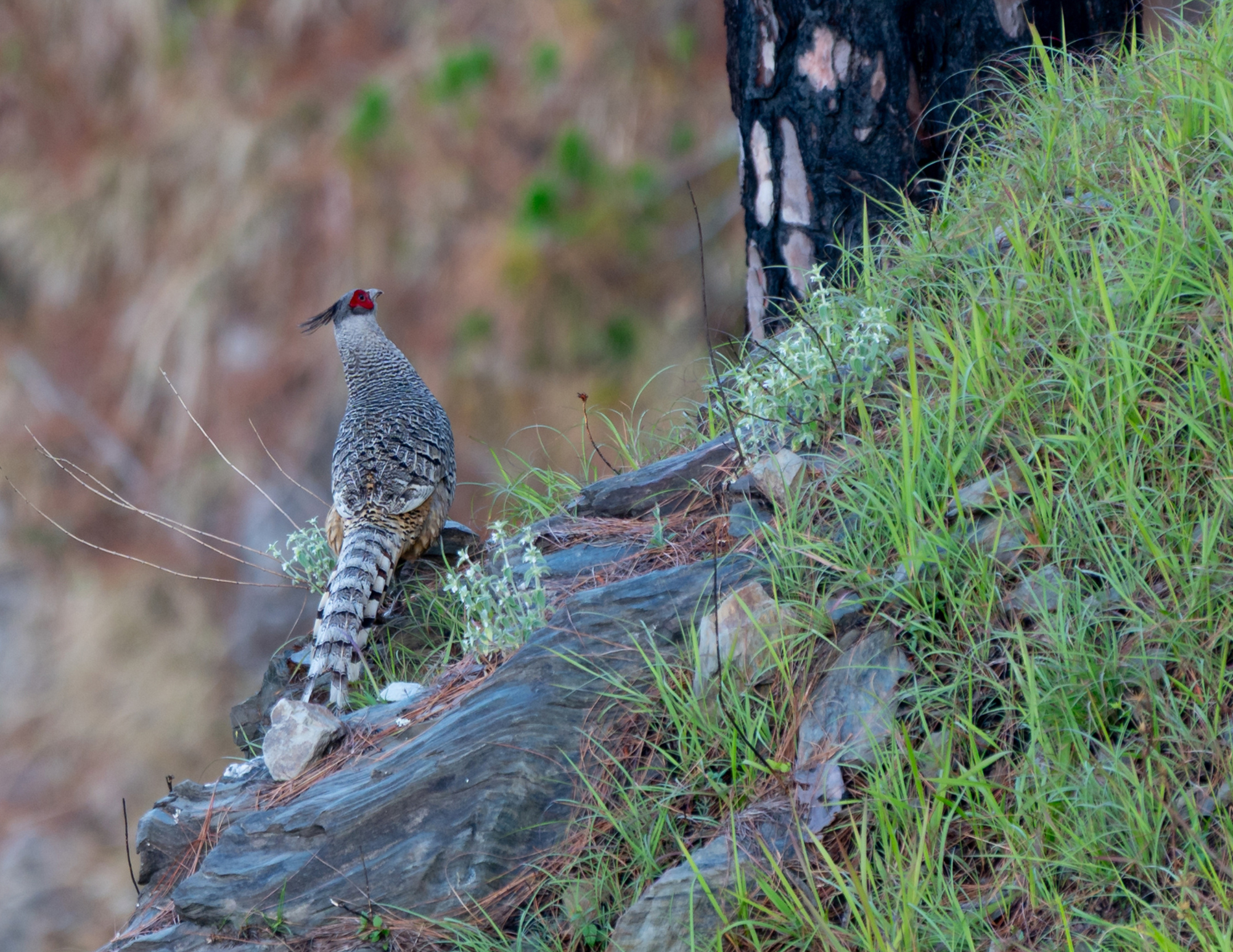
After several minutes of searching, our persistence paid off. Two Cheer Pheasants slowly emerged from the hillside, moving cautiously through the dry grass. As we continued scanning the landscape, two more individuals revealed themselves further down the valley, giving us four sightings in total. Most of the birds remained on the open slopes below the road, where the terrain provides ideal habitat for the species.
Watching them also explained why they are so difficult to locate. Despite being relatively large pheasants, their beautifully patterned plumage blends almost perfectly with the dry grasslands and rocky slopes. Unless they move or call, they become virtually invisible against the landscape. Standing quietly above the valley, listening to their calls while watching them disappear and reappear among the grasses, was one of the most rewarding wildlife experiences of the trip.
As dusk settled over the mountains, we made our way back to the homestay, carrying with us the excitement of an unforgettable evening in the company of one of the Himalaya’s most iconic birds.
The day ended on a particularly special note as we celebrated Sanvi’s 19th birthday at the homestay. It was a simple celebration shared with family and close friends, made even more memorable by the rain, the cool mountain air, and the peaceful surroundings. Later that night, we sat together on the balcony, watching scattered village lights shimmer across the distant hills while the gentle sound of rain echoed through the valley.
It felt like the perfect ending to our first day in Manila.
Day 2 — Above the Clouds
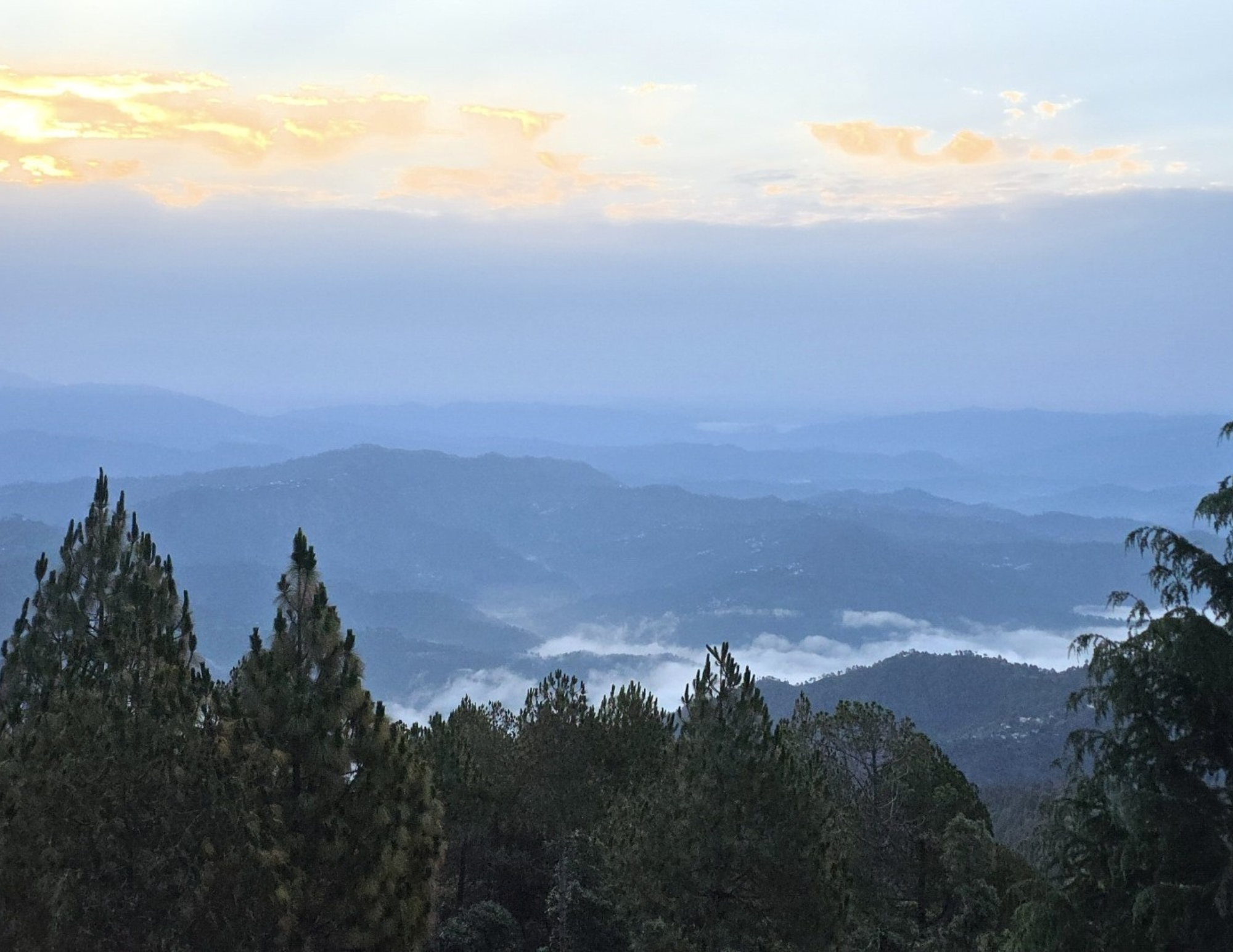
The next morning began well before sunrise. By around 5:30 a.m., we were once again on our way towards Dhotiyal, eager to explore the hills before the forests came fully alive. The drive itself was magical. As we climbed higher, the clouds slowly settled beneath the road, giving us the surreal feeling of travelling above them. Layer upon layer of mist drifted through the valleys below while the surrounding mountains emerged through the morning light.
Dhotiyal is a small mountain village comprising just a couple of dozen households, but for birdwatchers and naturalists it is an important stop in the Manila landscape. From here, a narrow road branches off towards Ekku Khet, winding through beautiful temperate forests dominated by Banj Oak, Rhododendron, and other Himalayan broad-leaved trees. These forests, together with the adjoining grassy slopes, create an ideal habitat for many of the region’s most sought-after birds and mammals.
Even before we began scanning the valley, the distant calls of Cheer Pheasants echoed across the hillsides. Like the previous evening, the birds announced their presence long before revealing themselves. We stopped beside the road and carefully surveyed the broad slopes below us.
While scanning the valley, a Barbet suddenly flew across and settled quietly on a nearby tree. Almost at the same moment, the sharp calls of the Cheer Pheasant echoed from the opposite hillside, followed moments later by the sudden flight of two birds crossing the valley before disappearing back into the dry grass. It was one of those brief yet unforgettable moments that remind you how alive these mountains truly are.
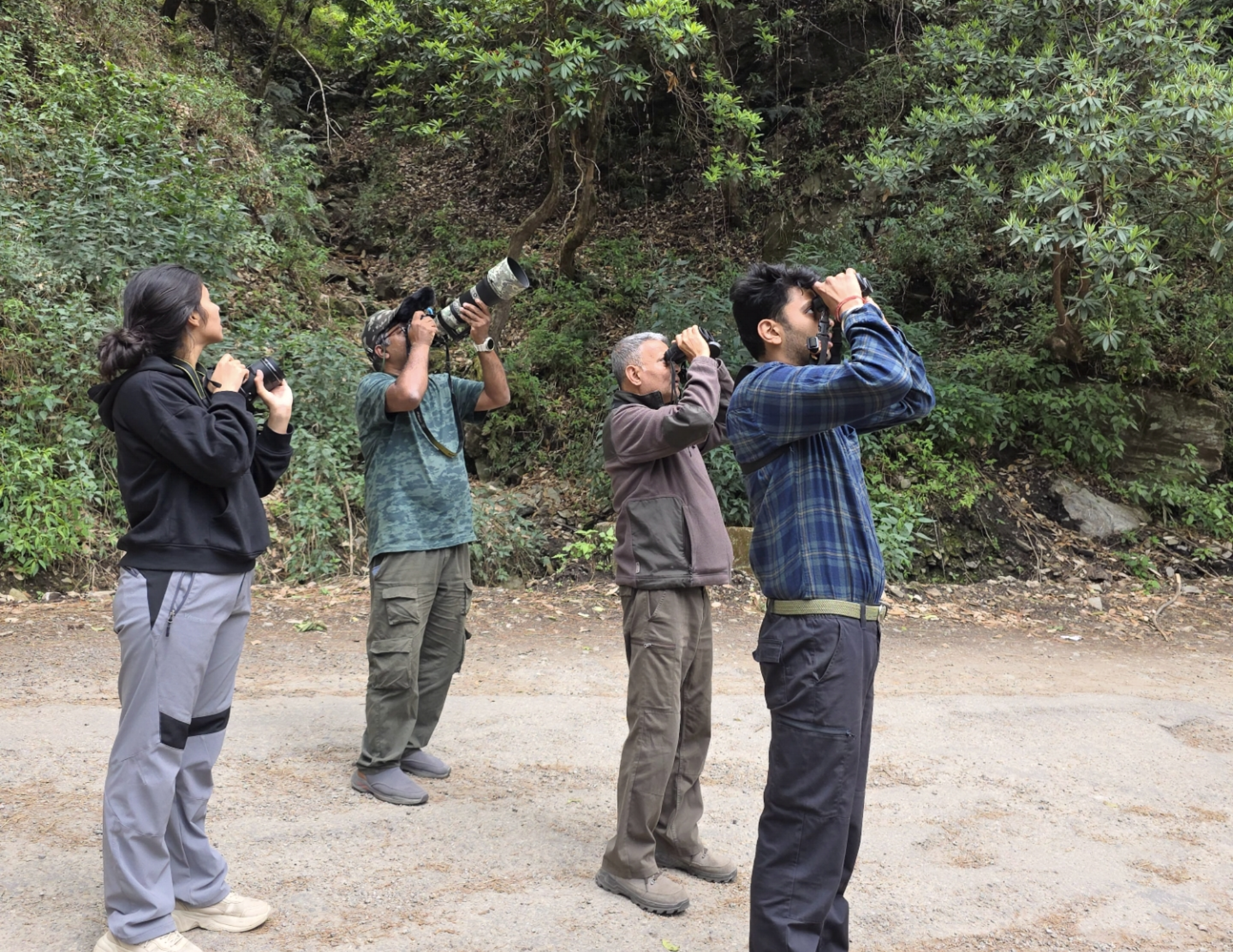
Patiently continuing our search, we eventually located two Cheer Pheasants feeding quietly on the slopes below the road. As we widened our search across the valley, another bird appeared further away, followed shortly by a fourth individual. Observing them in their natural habitat explained why the species is so challenging to find. Their beautifully mottled plumage blends seamlessly with the dry grasslands, making them almost impossible to detect unless they move or call. Standing silently above the valley, watching them emerge and disappear into the landscape, was undoubtedly one of the highlights of our time in Manila.
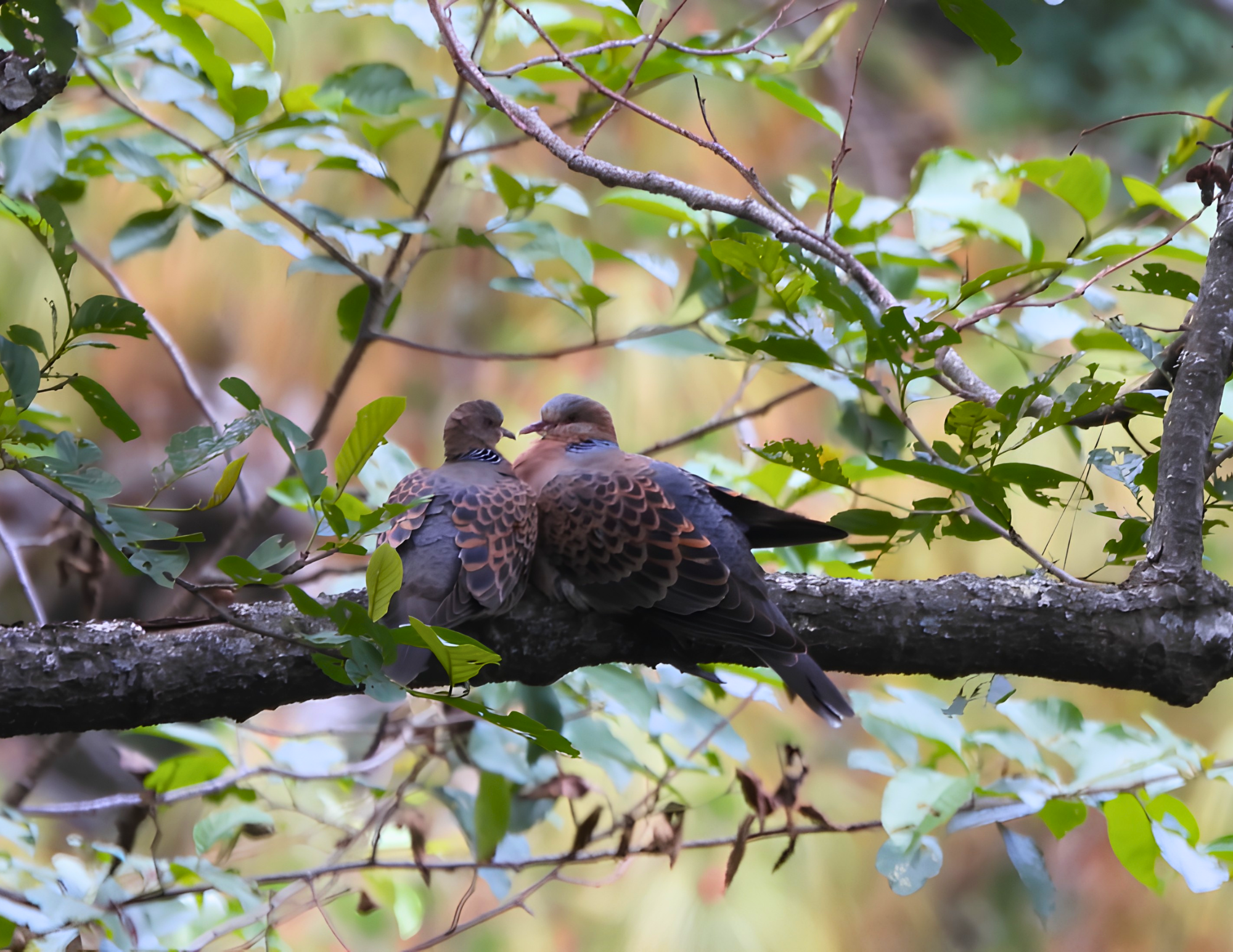
The morning continued to reward us with several other species. Flycatchers darted through the forest edges, Himalayan Woodpeckers called from the trees, while a pair of Oriental Turtle Doves perched quietly together on a branch, giving us what we jokingly called our “Valentine shot.” House Martins and swifts swept gracefully across the valley, while the surrounding forests echoed with the songs of numerous Himalayan birds.
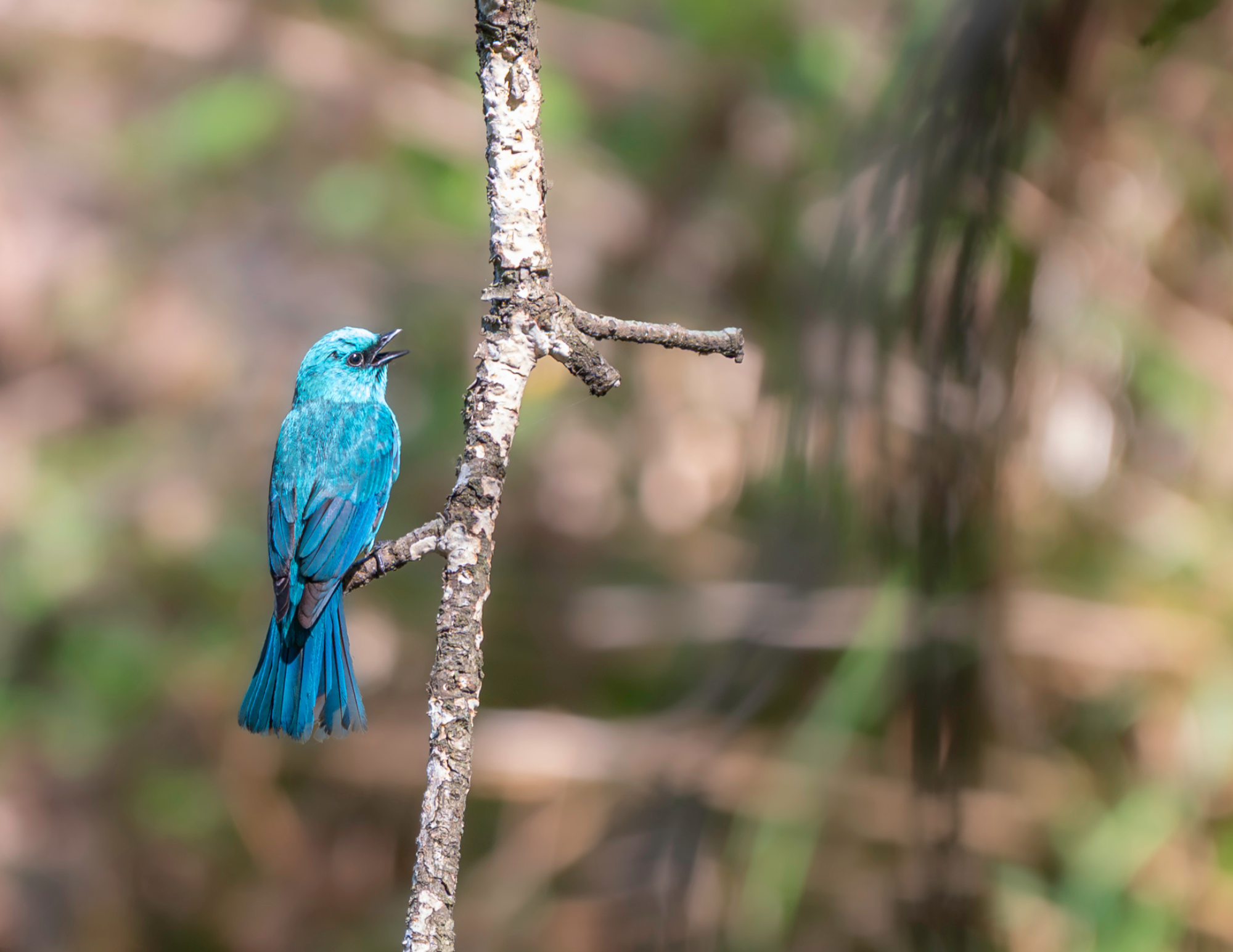
After a rewarding morning, we returned to Dhotiyal for breakfast before heading back to the homestay for a short break.
Later in the afternoon, we returned once again, this time for lunch at the small roadside dhaba run by Kirpal Singh and his family. For nearly three decades, this humble establishment has welcomed Sumantha during his birding excursions to Manila, making it far more than just another roadside eatery. Today, Kirpal, together with his two sons and daughter, continues that tradition with the same warmth and hospitality.
Lunch was simple yet delicious. Freshly prepared local dishes, including vegetarian preparations and a flavourful mutton curry, were cooked over a traditional wood-fired stove. At a time when many parts of India continue to experience shortages of LPG cylinders, the continued use of firewood not only reflects necessity but also lends the food a wonderful smoky flavour that is difficult to replicate.
As we enjoyed our meal, the windows of the dhaba offered uninterrupted views across the valley, where several magnificent raptors circled effortlessly on the afternoon thermals. Watching Steppe Eagles and a Mountain Hawk-Eagle soaring above the forests while enjoying a traditional mountain meal was one of those moments that perfectly captured the spirit of the journey.
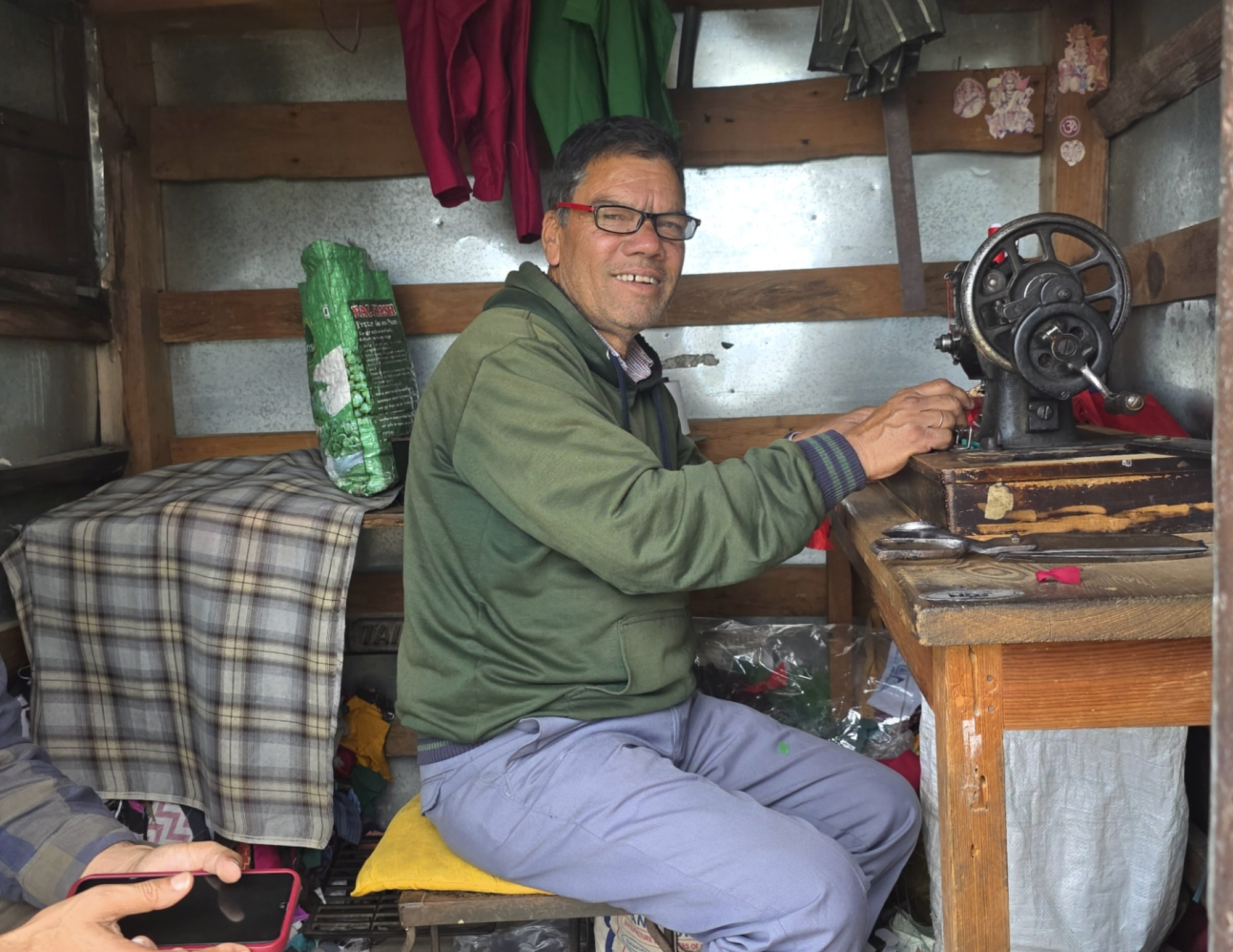
After lunch, we spent some time walking through the village, where life seemed to move at a pace rarely experienced elsewhere. We stopped for a conversation with Anand Singh Bisht, the local tailor, whose small shop has served generations of villagers by stitching school uniforms, traditional clothing, and wedding attire. In a world where life often moves at an exhausting pace, it was refreshing to meet someone whose craft continues to be shaped by patience, simplicity, and community. These small conversations with local people often become as memorable as the wildlife itself.
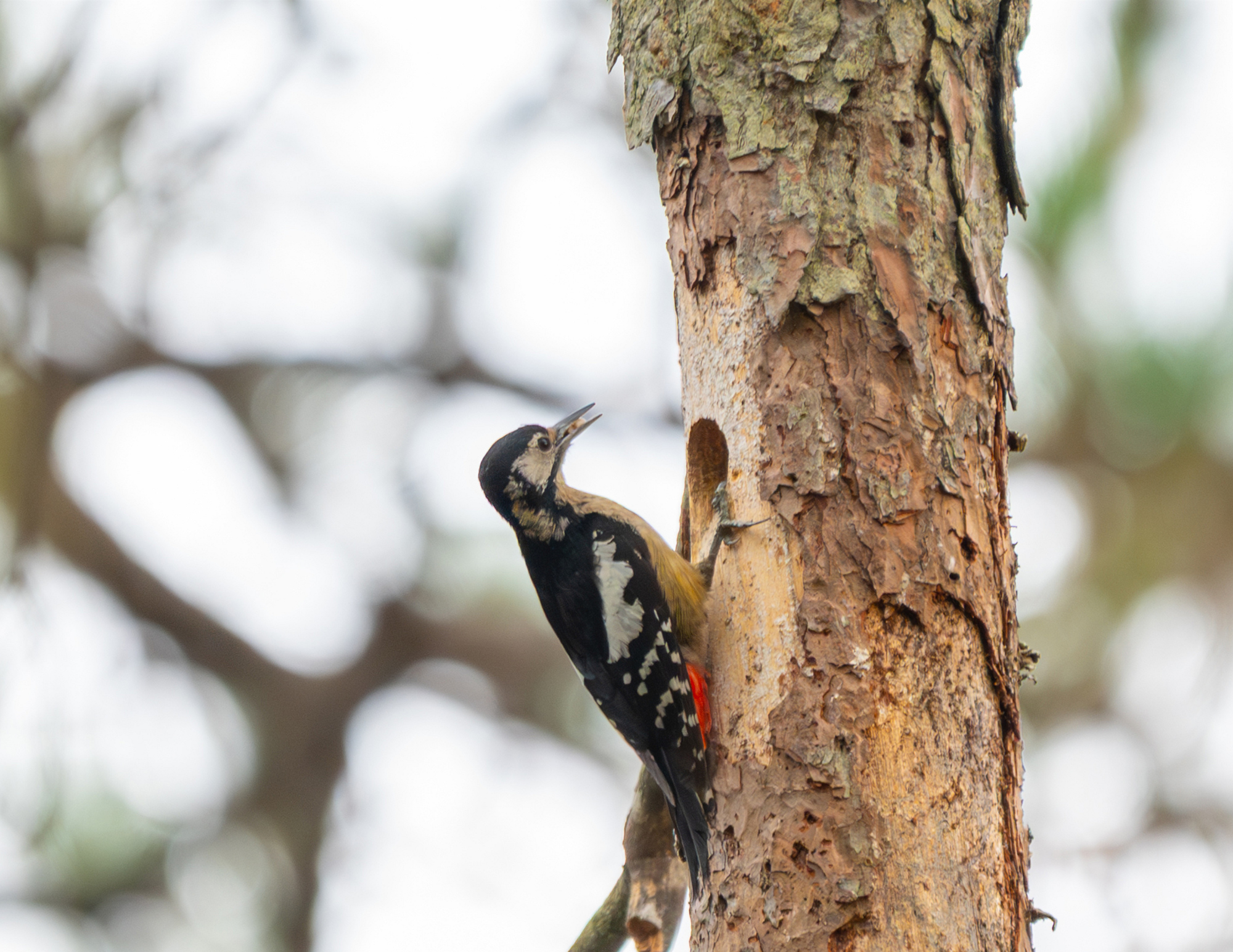
Soon afterwards, dark clouds gathered over the mountains once again, forcing us to cut short our afternoon birding plans. On our way back, we paused briefly near the entrance to a forest trail leading towards the Manila Devi Temple, where a Himalayan Woodpecker was busily chiselling away at the bark of an old tree. Its rhythmic drumming echoed softly through the rain-soaked forest before disappearing into the silence.
By the time we reached the homestay, the hills had disappeared beneath heavy rain. Wrapped in blankets, we sat on the balcony with steaming cups of chai and biscuits, quietly watching the clouds roll across the valley.
Then, almost as suddenly as the rain had arrived, the sky began to clear.
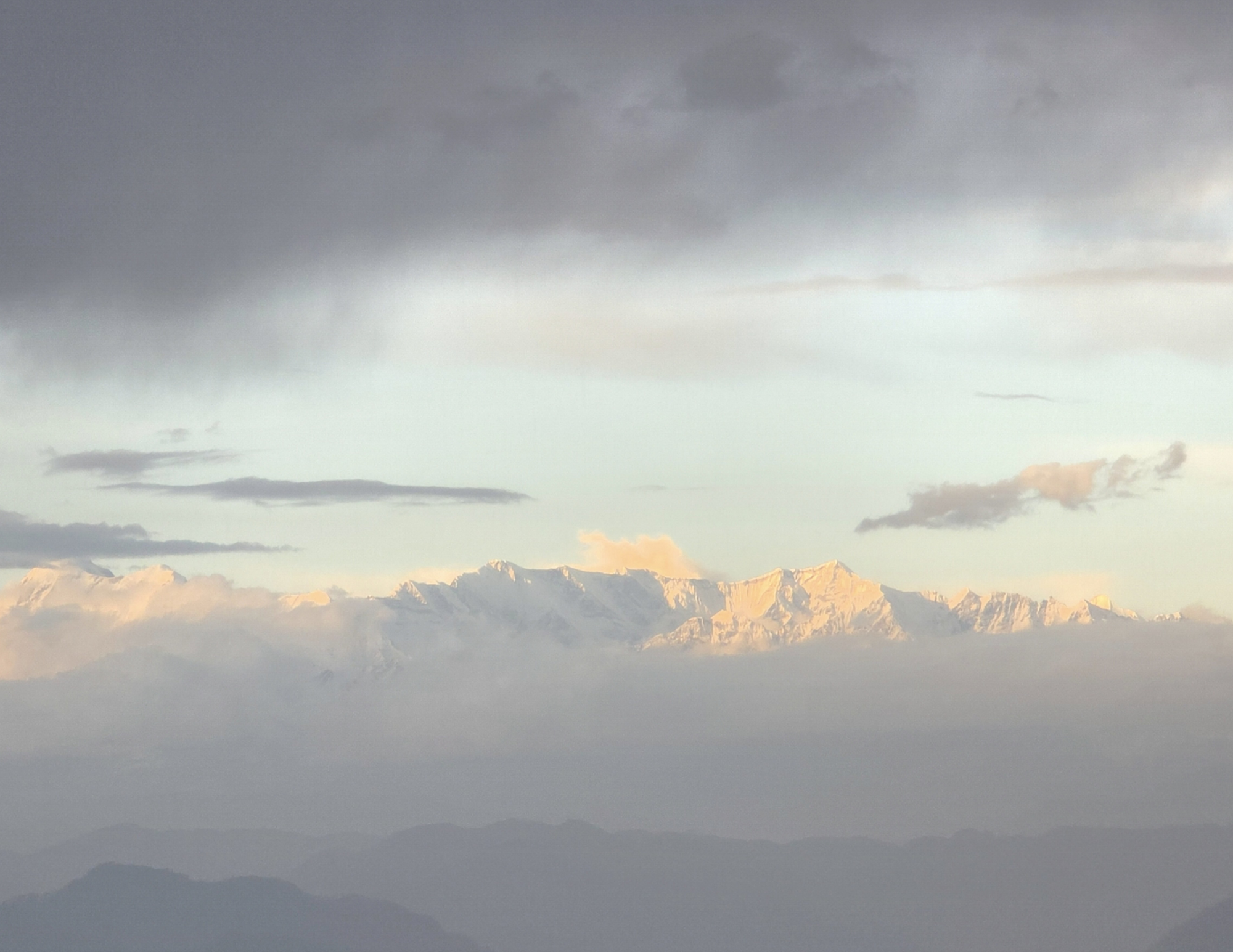
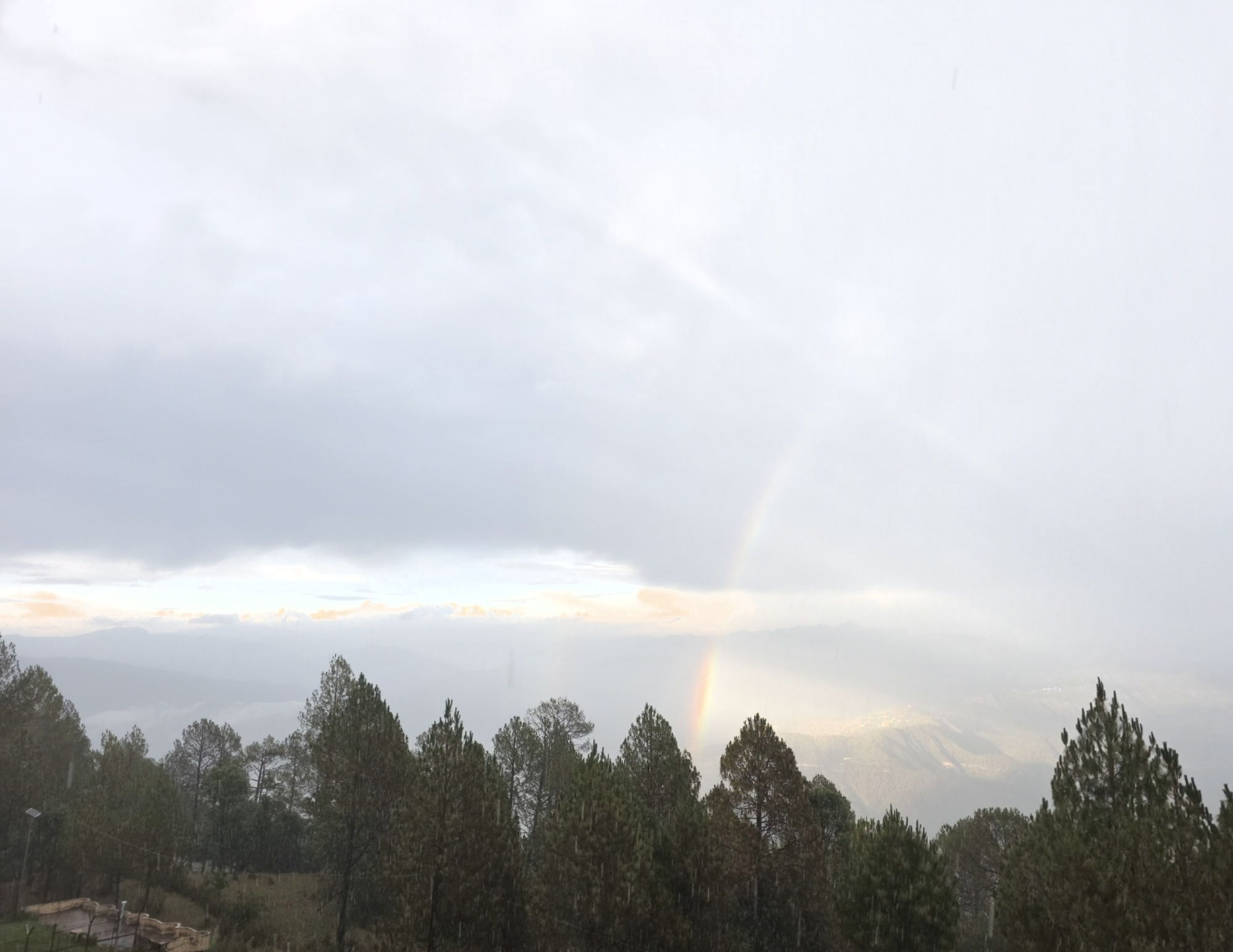
Sunlight broke through the clouds, revealing not one but two brilliant rainbows arching across the mountains. Moments later, the snow-covered peaks of Nanda Devi, Trishul, and Nanda Ghunti emerged from behind the retreating mist, glowing softly in the evening light. Clouds floated below the ridges while the distant Himalaya stood brilliantly illuminated above them. It was, without question, one of the most spectacular mountain vistas any of us had ever witnessed.
After a moment like that, there was nowhere else we wanted to be.
The rest of the evening was spent at the homestay, sharing stories, laughter, and another wonderful meal prepared by Jyoti Didi and Bhuvan Bhaiya, whose warmth and hospitality made us feel less like guests and more like family. That night, we retired early, knowing another unforgettable morning awaited us in the forests of Manila.
Day 3 — The Call of the Forest
Our final morning in Manila began even before dawn. With cameras, binoculars and warm jackets packed, we once again set out into the forests, this time with one objective in mind—to find the elusive Koklass Pheasant, one of the most secretive birds of the Himalayan temperate forests.
Our destination was the forest surrounding the Manila Devi Temple, where one narrow trail leads towards the temple while another disappears into dense oak and rhododendron forests. The previous night’s rain had transformed the landscape. The forest floor was damp, the air crisp, and the silence was broken only by the occasional calls of Himalayan birds.
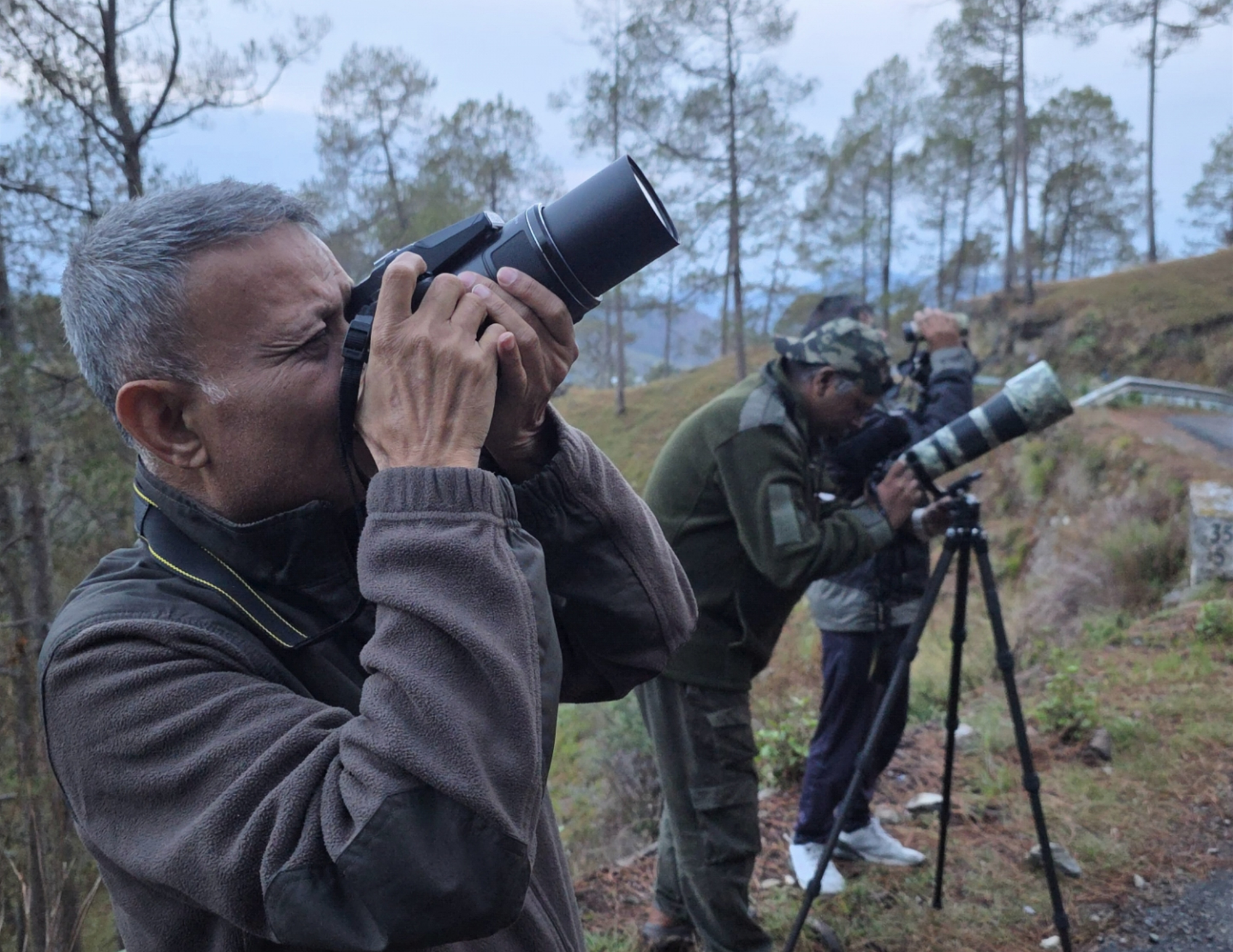
We had barely entered the forest when a loud pheasant call echoed through the trees.
Instinctively, we stopped.
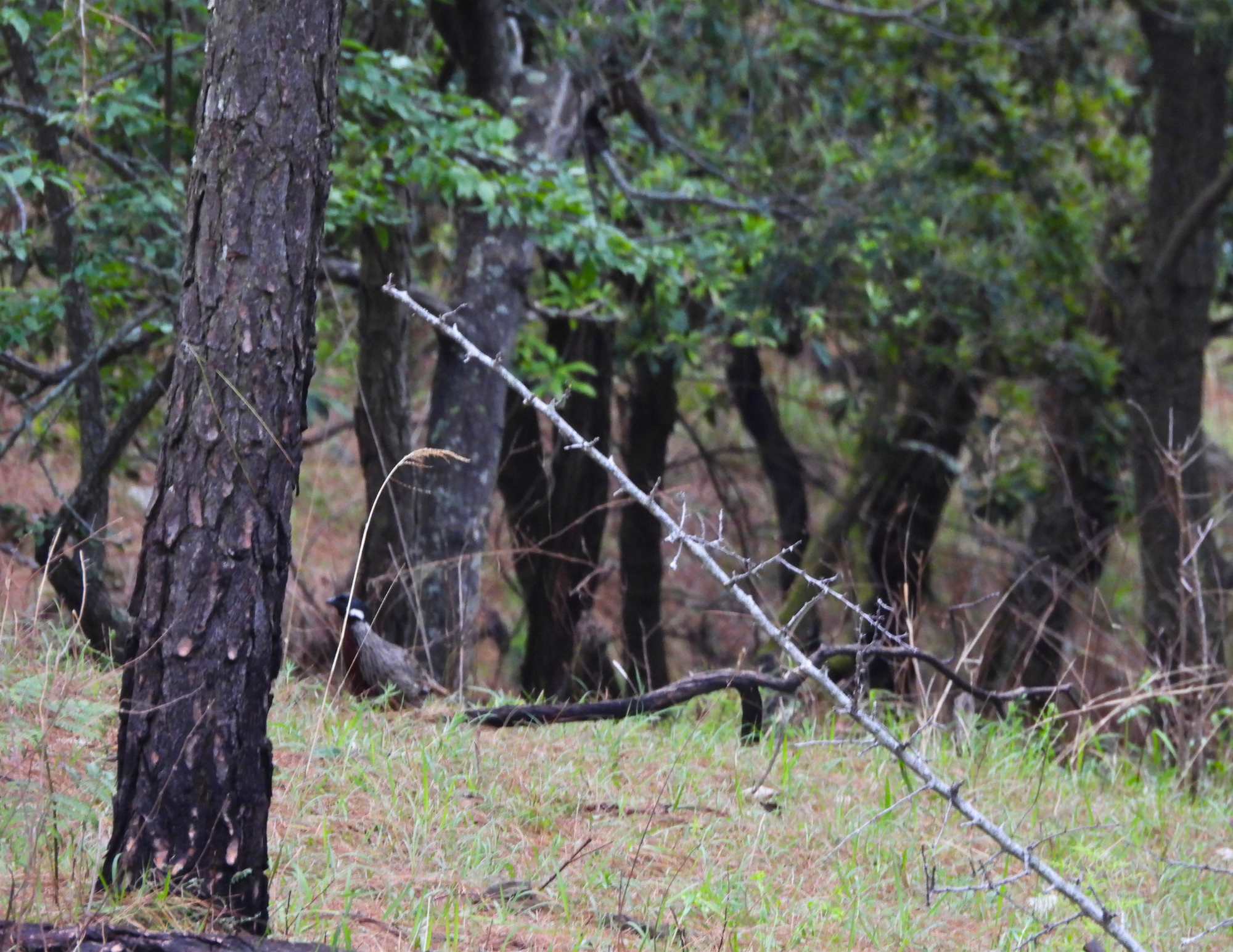
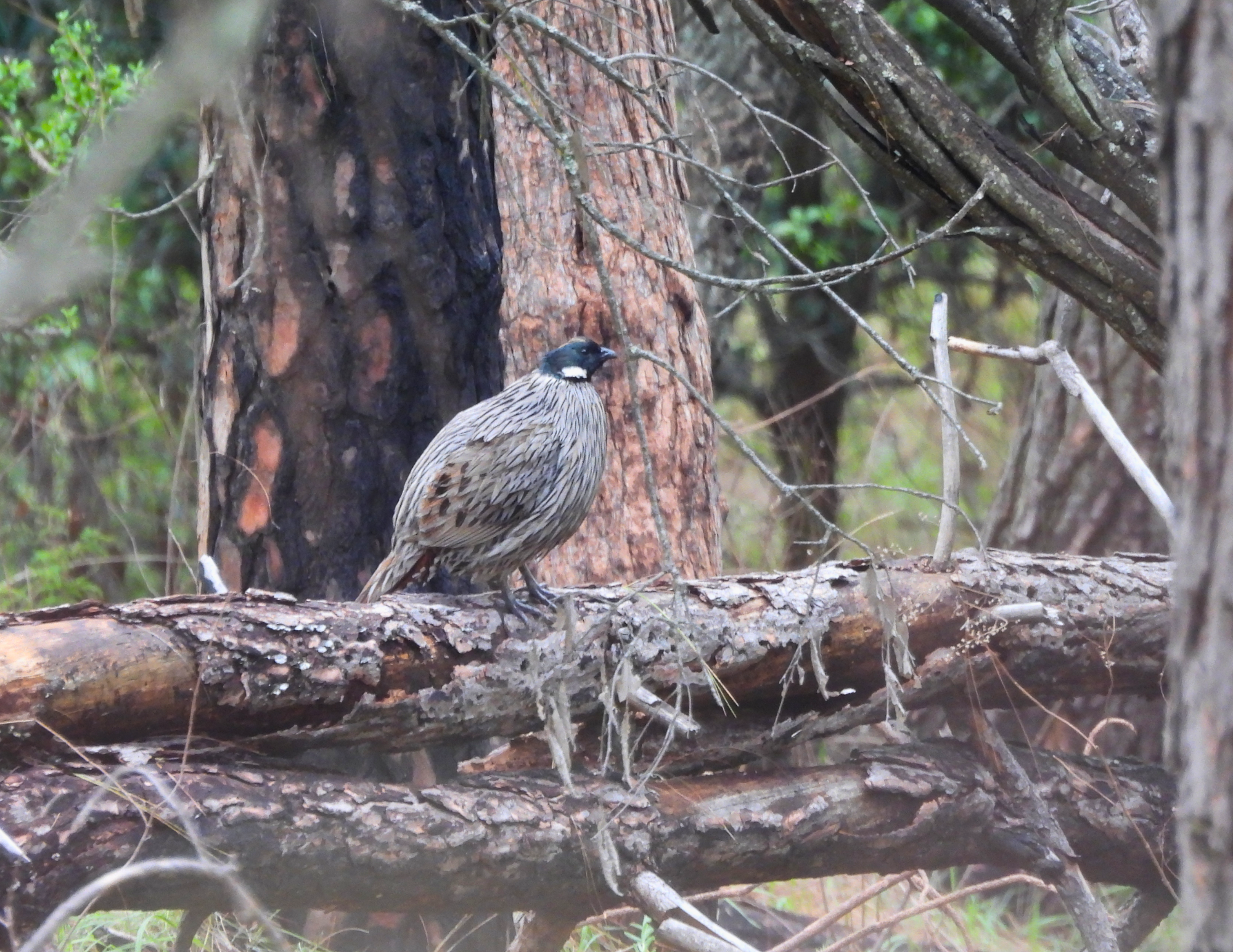
A few moments later, a male Koklass Pheasant emerged from the undergrowth, followed quietly by a female. They moved cautiously through the forest floor, disappearing and reappearing between fallen branches and dense vegetation. The male, with its beautifully patterned plumage and striking appearance, was a magnificent sight. Koklass are often encountered in pairs, and watching them together in their natural habitat felt like a fitting reward for the early start.
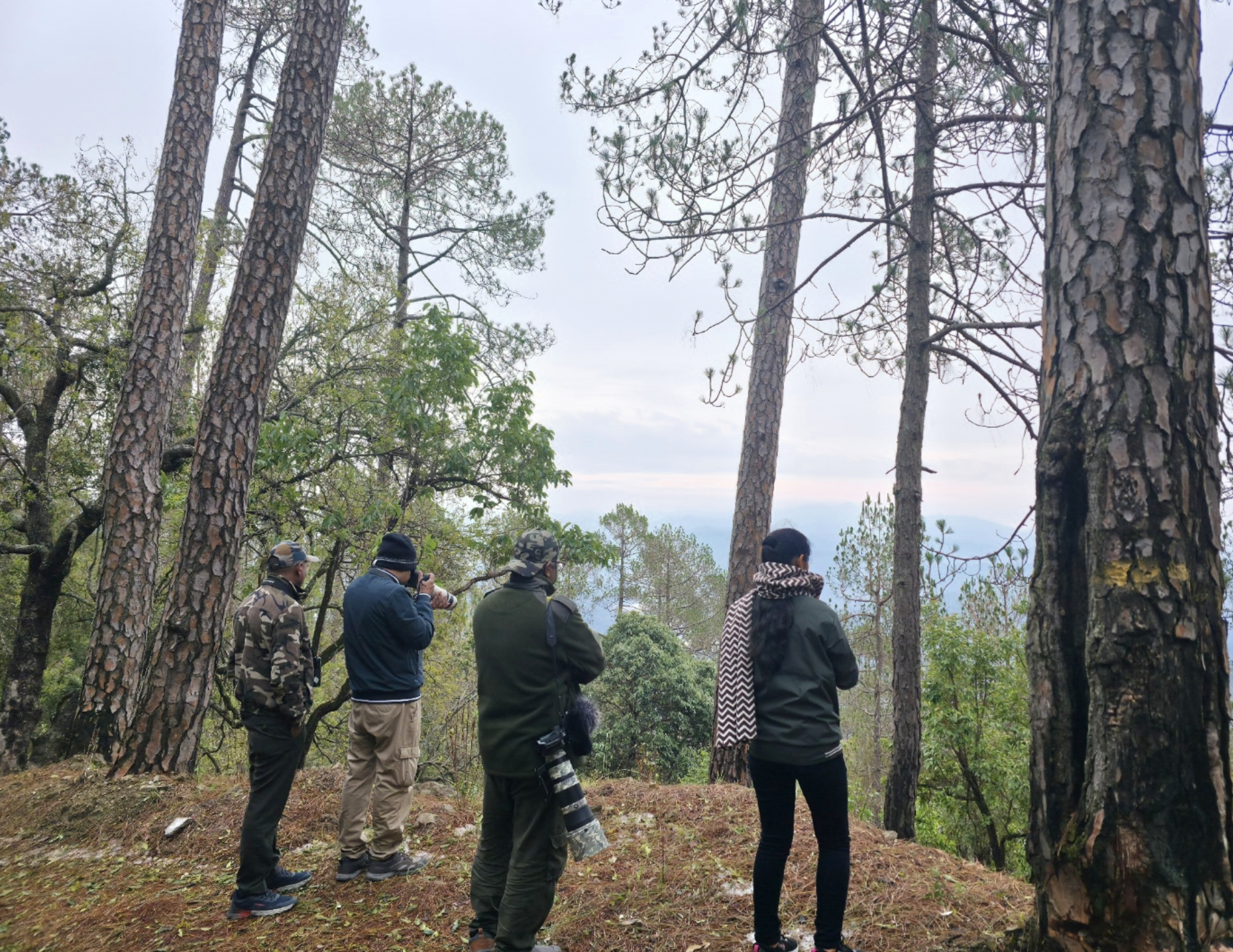
For nearly three hours, we remained in the forest, observing quietly and allowing the landscape to reveal itself at its own pace. Every sound seemed significant. At one point, the sharp alarm call of a Sambar Deer suddenly echoed through the valley—a warning often given when a predator is nearby. For several minutes, we waited silently, scanning the forest in the hope that a leopard might appear, but the mountains chose to keep their secret that morning.
The previous night’s rain and hail had left the forests unusually cold for early May. The icy mountain wind swept through the trees, making the morning feel more like late winter than the beginning of summer.
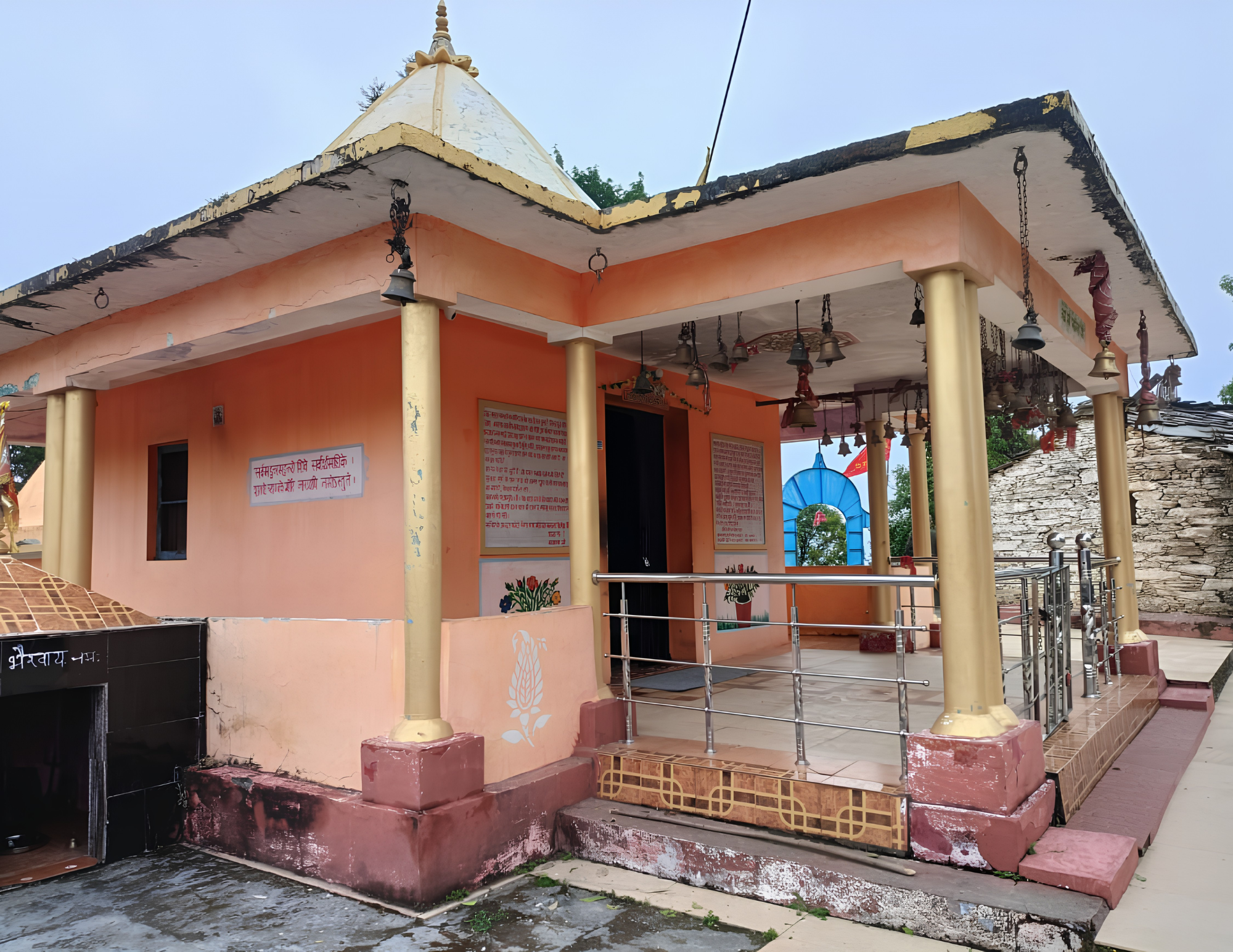
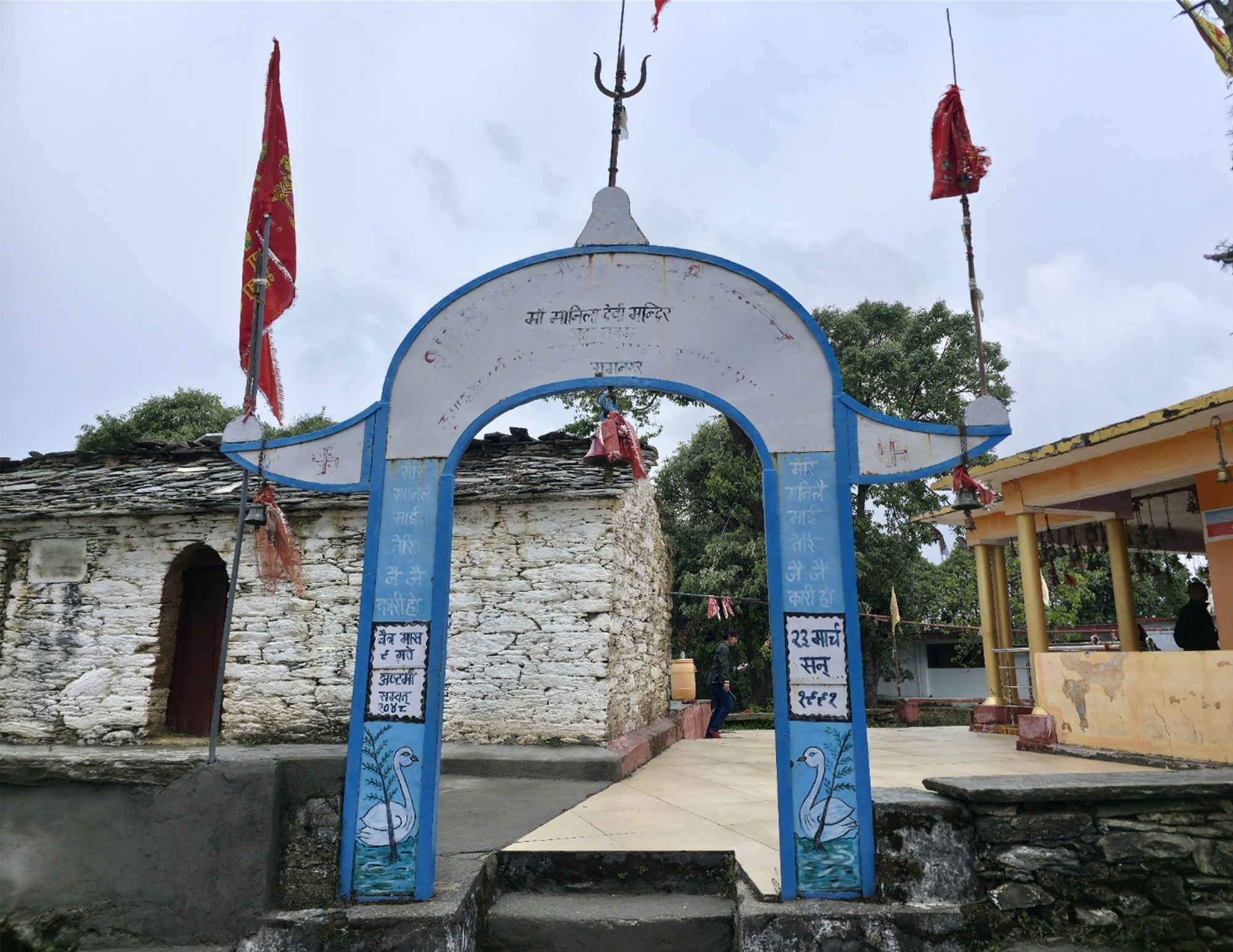
Returning to the homestay, we packed our belongings before making one final stop at the Manila Devi Temple. Built in traditional Kumaoni architectural style using stone and wood, the temple has long served as the spiritual heart of the region. Beyond its religious importance, the temple and the surrounding forests have played an important role in protecting the landscape for generations. With minimal disturbance around these sacred forests, wildlife continues to thrive here, making Manila one of the finest places in Kumaon to experience both nature and culture together.
Before beginning our journey back to Ramnagar, we stopped once again at Kirpal Singh’s Dhaba in Dhotiyal for tea and a late breakfast. Places like these quietly become part of every memorable journey. Good food, warm conversations, familiar faces, and the comforting simplicity of mountain hospitality often leave an impression long after the journey has ended.
One final stop was inevitable.
As we descended towards the plains, we pulled over once again at the valley where we had enjoyed such wonderful views of the Cheer Pheasant over the previous two days. This time, however, the slopes remained silent. Despite patiently scanning the hillside, the birds chose to remain hidden.
That, perhaps, is one of the greatest lessons birdwatching teaches us.
Nature offers no guarantees.
Every sighting is earned through patience, persistence, and a little luck. Sometimes the greatest reward lies simply in spending time outdoors, whether the birds decide to reveal themselves or not.
As the mountains gradually faded behind us and the familiar roads towards Ramnagar reappeared, we realised this journey had never been only about birdwatching.
It had been about slowing down.
About sharing quiet moments with family.
About meeting people whose warmth made us feel at home.
About listening to forests instead of traffic.
And about discovering that some of life’s richest experiences are often found in places where very little seems to happen.
Reflections
Perched high above the Western Ramganga valley, Manila offered us far more than breathtaking Himalayan views. It introduced us to a landscape where forests, wildlife, mountain communities, and ancient traditions continue to exist in remarkable harmony.
From observing the beautifully camouflaged Cheer Pheasant on grassy slopes to watching a pair of Koklass Pheasants emerge from the temperate forests, every day brought new discoveries. Village celebrations, conversations over cups of tea, home-cooked meals, dramatic mountain weather, soaring raptors, and evenings spent watching clouds drift across the valleys reminded us that meaningful journeys are rarely measured by distance alone.
Some places impress you.
Others quietly become a part of you.
For us, Manila will always remain one of those places.
Experience Manila with Vanghat
Whether you’re a passionate birder hoping to photograph the elusive Cheer Pheasant, a wildlife enthusiast exploring the forests of Kumaon, or simply someone looking to slow down amidst mountain landscapes and village life, Manila offers an experience unlike any other.
At Vanghat, we believe the finest journeys are those that allow you to truly connect with a place—its forests, its wildlife, its people, and its stories. Our guided excursions to Manila are thoughtfully designed to help you experience this remarkable landscape at a slower pace, combining birdwatching, natural history, local culture, and meaningful interactions with the communities who call these mountains home.
If you’re looking to discover a quieter side of the Kumaon Himalaya, we’d be delighted to help you plan your journey.
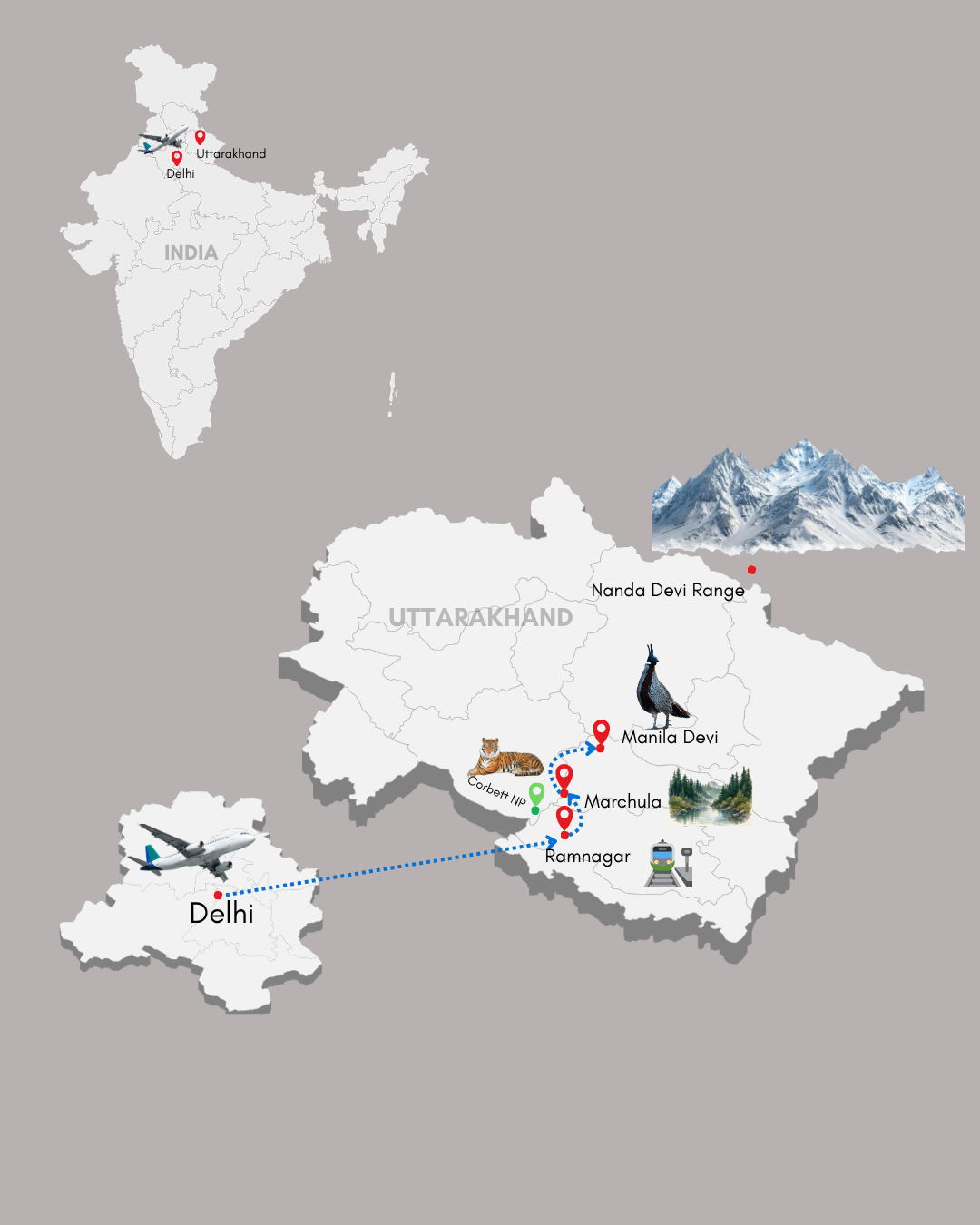
Tour Map
(Delhi – Corbett – Marchula – Manila Devi – Delhi)
Birds & Mammals Checklist
| SR | Bird Species |
| 1 | Koklass Pheasant (Pucrasia macrolopha) |
| 2 | Eurasian Collared-Dove (Streptopelia decaocto) |
| 3 | Crested Bunting (Emberiza lathami) |
| 4 | Kalij Pheasant (Lophura leucomelano) |
| 5 | Oriental Turtle-Dove (Streptopelia orientalis) |
| 6 | Gray-capped Pygmy Woodpecker (Yungipicus canicapillus) |
| 7 | Himalayan Woodpecker (Dendrocopos himalayensis) |
| 8 | Gray-headed Canary-Flycatcher (Culicicapa ceylonensis) |
| 9 | Gray-hooded Warbler (Phylloscopus xanthoschistos) |
| 10 | White-tailed Nuthatch (Sitta himalayensis) |
| 11 | Chestnut-bellied Nuthatch (Sitta cinnamoventris) |
| 12 | Verditer Flycatcher (Eumyias thalassinus) |
| 13 | Blue Whistling-Thrush (Myophonus caeruleus) |
| 14 | Russet Sparrow (Passer cinnamomeus) |
| 15 | Rock Pigeon (Columba livia) |
| 16 | Spotted Dove (Spilopelia chinensis) |
| 17 | Wedge-tailed Green-Pigeon (Treron sphenurus) |
| 18 | Large Hawk-Cuckoo (Hierococcyx sparverioides) |
| 19 | Rufous-bellied Woodpecker (Dendrocopos hyperythrus) |
| 20 | Lesser Yellownape (Picus chlorolophus) |
| 21 | White-browed Shrike-Babbler (Pteruthius aeralatus) |
| 22 | Indian Golden Oriole (Oriolus kundoo) |
| 23 | Ashy Drongo (Dicrurus leucophaeus) |
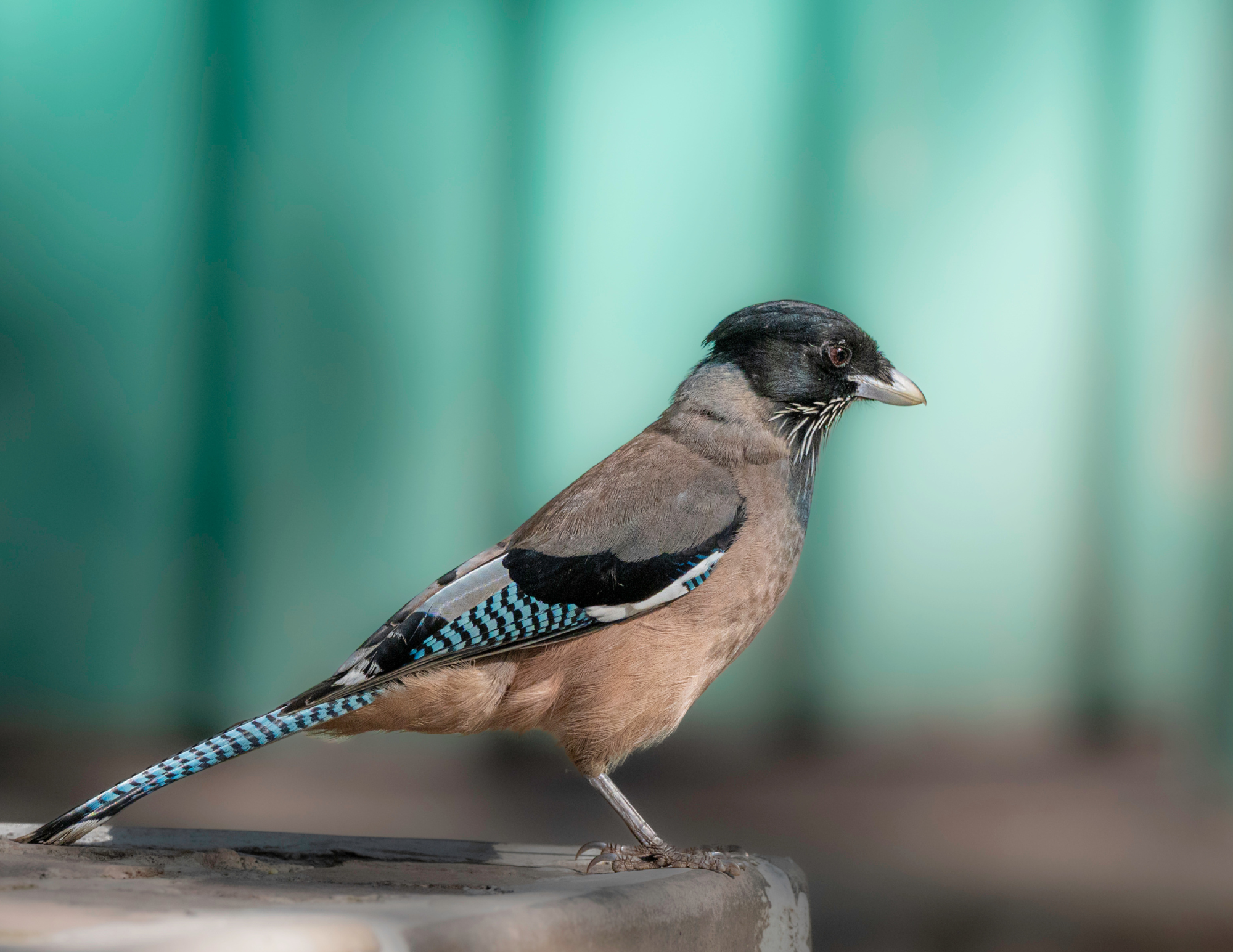
| 24 | Black-headed Jay (Garrulus lanceolatus) |
| 25 | Green-backed Tit (Parus monticolus) |
| 26 | Himalayan Black-lored Tit (Machlolophus xanthogenys) |
| 27 | Barn Swallow (Hirundo rustica) |
| 28 | Streaked Laughingthrush (Trochalopteron lineatum) |
| 29 | Rufous Sibia (Heterophasia capistrata) |
| 30 | Bar-tailed Treecreeper (Certhia himalayana) |
| 31 | Tickell’s Thrush (Turdus unicolor) |
| 32 | Ultramarine Flycatcher (Ficedula superciliaris) |
| 33 | Crimson Sunbird (Aethopyga siparaja) |
| 34 | Cheer Pheasant (Catreus wallichii) |
| 35 | Shikra (Tachyspiza badia) |
| 36 | Great Barbet (Psilopogon virens) |
| 37 | Gray-headed Woodpecker (Picus canus) |
| 38 | Verditer Flycatcher (Eumyias thalassinus) |
| 39 | Eurasian Jay (Garrulus glandarius) |
| 40 | Large-billed Crow (Corvus macrorhynchos) |
| 41 | Black Bulbul (Hypsipetes leucocephalus) |
| 42 | Red-vented Bulbul (Pycnonotus cafer) |
| 43 | Himalayan Bulbul (Pycnonotus leucogenys) |
| 44 | Jungle Myna (Acridotheres fuscus) |
| 45 | Gray-winged Blackbird (Turdus boulboul) |
| 46 | Black Francolin (Francolinus francolinus) |
| 47 | Brown-fronted Woodpecker (Dendrocoptes auriceps) |
| 48 | Long-tailed Minivet (Pericrocotus ethologus) |
| 49 | White-throated Laughingthrush (Pterorhinus albogularis) |
| 50 | Upland Pipit (Anthus sylvanus) |
| 51 | Kalij Pheasant (Lophura leucomelanos) |
| 52 | Wedge-tailed Green-Pigeon (Treron sphenurus) |
| 53 | Blue-throated Barbet (Psilopogon asiaticus) |
| 54 | Gray-headed Woodpecker (Picus canus) |
| 55 | Greater Yellownape (Chrysophlegma flavinucha) |
| 58 | Gray-winged Blackbird (Turdus boulboul) |
| 59 | Small Niltava (Niltava macgrigoriae) |
| 61 | Scaly-bellied Woodpecker (Picus squamatus) |
| 62 | Scarlet Minivet (Pericrocotus speciosus) |
| 63 | Eastern Red-rumped Swallow (Cecropis daurica) |
| 64 | Rufous-bellied Woodpecker (Dendrocopos hyperythru) |
| 65 | Maroon Oriole (Oriolus traillii) |
| Mammals Species | |
| 1 | Hanuman Langur (Semnopithecus entellus) |
| 2 | Rhesus Macaque (Macaca mulatta) |
| 3 | Barking Deer or Muntjac (Muntiacus muntjak) |
| 4 | Himalayan Goral (Naemorhedus goral) |
| 5 | Yellow-throated Marten (Martes flavigula) |
| 6 | Barking Deer (Muntiacus muntjak) |
| 7 | Sambar Deer (Rusa unicolor) |
| 8 | Golden Jackal (Canis aureus) |
| Other Species | |
| 1 | Mugger Crocodile (Crocodylus palustris) |
| 2 | Golden Mahseer (Tor putitora) |
Categorised in: Trip Reports
This post was written by Vanghat Admin


